The recurring narrative in this week’s cybersecurity landscape is characterized by a hauntingly consistent question: Why was that allowed to work? From browser extensions overstepping their permissions to trusted enterprise services being weaponized in complex phishing campaigns, the incidents reported over the past seven days share a common denominator. The threats were not born from sophisticated, state-sponsored exploits or zero-day vulnerabilities that defied conventional defense. Instead, they were the result of the path of least resistance—a failure in the fundamental architecture of digital trust and access control.
In the current threat environment, attackers no longer prioritize the discovery of novel exploits. Instead, they focus on the exploitation of existing configurations. Whether it is an outdated, unpatched vulnerability that remains visible to internet-facing scanners, or an exposed database left without adequate authentication, the modern attack surface is defined by "lazy hinges." These are the small, overlooked gaps in security posture that provide an unobstructed route into otherwise fortified systems.
The Anatomy of a Breach: Context and Chronology
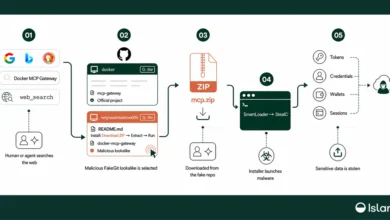
The events of this week highlight a shift in methodology. Rather than breaking down the door, attackers are simply walking through ones that were left unlocked. Consider the lifecycle of a typical incident reported this week:
- The Reconnaissance Phase: Automated scanning tools identify a misconfigured cloud bucket or a legacy service still active on a corporate network.
- The Access Phase: The attacker gains entry, not through an exploit, but through legitimate credentials or an exposed API endpoint.
- The Persistence Phase: Once inside, the threat actor leverages the inherent trust granted to the compromised service or account to move laterally.
- The Exfiltration Phase: Sensitive data is siphoned off using the same protocols that authorized users rely on daily, making the traffic appear benign to automated monitoring systems.
This chronology is consistent across diverse sectors, from small enterprises to large-scale infrastructure providers. The commonality suggests that security teams are fighting a war against complexity, where the sheer volume of "familiar" services—third-party packages, browser extensions, and AI-powered automation tools—has created an environment where granular control is increasingly difficult to maintain.
Supporting Data and the Cost of Permissiveness
Empirical data from recent industry reports underscores the severity of this issue. According to the 2024 State of Cybersecurity report, over 65% of successful data breaches involving third-party entities were linked to excessive permissioning. Organizations are frequently providing "unlimited trust" to internal tools and external integrations, effectively bypassing the principle of least privilege.

Furthermore, statistics regarding software supply chain security reveal that malicious packages appearing in open-source repositories increased by 140% in the last fiscal year. These packages often mimic legitimate development tools, tricking developers into granting them elevated access to build environments. Once installed, these packages act as a bridge, allowing attackers to inject malicious code into production software—a supply chain attack that relies entirely on the developer’s trust in the package manager.
The financial implications are equally stark. The average cost of a breach caused by misconfigured services or stolen credentials has risen by nearly 12% year-over-year, reaching an average of $4.8 million per incident. These costs include remediation, forensic analysis, regulatory fines, and the long-term impact of reputational damage.
Industry Responses and Defensive Strategies
In response to the recurring nature of these breaches, major software vendors and cybersecurity governing bodies have begun issuing updated guidance. CISA (the Cybersecurity and Infrastructure Security Agency) has recently emphasized the necessity of "secure-by-design" principles. The core of this philosophy is the reduction of inherent trust.
"The industry must move away from the assumption that a service is safe simply because it is familiar," noted an analyst at a leading security firm. "We are seeing a trend where vendors are now enforcing stricter default settings, such as multi-factor authentication (MFA) requirements for all API calls and automated audits of third-party extensions. The goal is to move the burden of security away from the end-user and toward the service provider."
Major cloud providers have also begun implementing "Just-In-Time" (JIT) access models. Under these protocols, permissions are not granted permanently but are instead provisioned for a limited duration only when a specific task requires them. This effectively mitigates the risk of an attacker utilizing a compromised account that possesses static, long-term administrative privileges.
The Philosophy of "Boring Handoffs"
The most significant takeaway from this week’s developments is that security is failing at the "boring handoffs." These are the points of intersection between disparate systems—where a user logs into a third-party app, where a script interacts with a cloud database, or where a browser extension pulls data from a secure site.

These handoffs are often treated as routine and, consequently, are rarely subjected to the same scrutiny as primary login portals or firewall configurations. Attackers are acutely aware of this, focusing their efforts on the "in-between" spaces of a network architecture. If a system is configured to trust a secondary service, the attacker does not need to bypass the primary security layer; they simply compromise the secondary service and inherit its trust.
This is not a failure of technology, but a failure of policy. Organizations must move toward a model of "zero-trust" that extends beyond human users to include every package, extension, and automated service within the environment. Every connection must be verified, every permission must be explicitly defined, and every "boring handoff" must be audited.
Broader Implications and Future Outlook
The implications for the future of enterprise security are clear: the perimeter is effectively dead. As organizations continue to migrate to cloud-native, distributed architectures, the focus must shift from defending the network boundary to securing the identity and the transaction.
If the events of this week have taught the industry anything, it is that "patching faster" is no longer a sufficient strategy. Patching is a reactive measure; it addresses the symptom, not the underlying architecture of trust. A more robust approach involves a fundamental reassessment of what we allow to interact with our data.
As we look toward the remainder of the year, organizations should prioritize the following:
- Permission Audits: Conducting a comprehensive review of all browser extensions and third-party integrations currently active within the enterprise environment.
- Automated Governance: Implementing automated tools that flag deviations from least-privilege policies in real-time.
- Segmented Environments: Ensuring that even "trusted" services have limited access to sensitive data, preventing lateral movement in the event of a compromise.
- Cultural Shift: Promoting a security-first mindset among developers, where the risks associated with third-party packages and integrations are as well-understood as the risks of unpatched servers.
In conclusion, the headlines may focus on the latest, most sophisticated-sounding attack, but the reality remains much more mundane. Security is not lost in a blaze of high-tech glory; it is lost in the quiet, overlooked, and routine interactions that we permit every day. By tightening the hinges and questioning the trust we place in the familiar, organizations can significantly reduce their exposure to the types of breaches that dominated this week’s security reports. The path to a more secure future is not found in more complex defenses, but in the rigorous, disciplined management of the simple, overlooked access points that define the modern digital enterprise.
Related posts: