World Unveils Ambitious Global Expansion for Human Verification Project, Anchored by Tinder Integration and AI-Proofing Tools

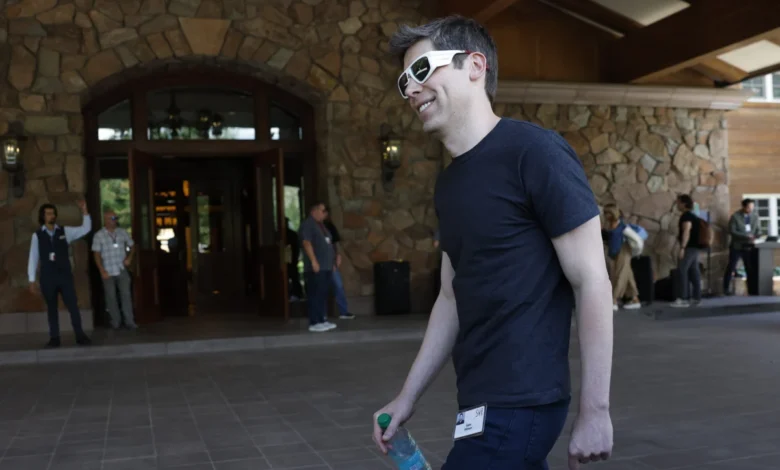
At a bustling, trendy venue near the San Francisco pier, Sam Altman’s identity verification project, World, heralded its next phase of evolution, marked by rapid expansion and a broadening of its ambitious scope. This significant strategic pivot and technological advancement commences with a prominent integration into the popular dating application, Tinder, signaling a bold step into mainstream digital life. The event, held at The Midway, served as a platform for Tools for Humanity (TFH), the company behind the World project, to detail its extensive plans for integrating its innovative verification technology across a diverse array of public and private digital arenas. These include dating apps, event and concert ticketing systems, business organizations, email platforms, and other critical facets of contemporary online interaction.
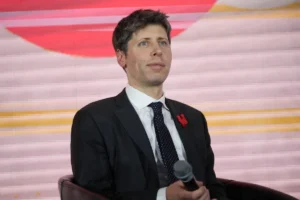
Sam Altman, the co-founder of World and a prominent figure in the artificial intelligence landscape, addressed a packed crowd, articulating the urgent necessity for such a verification system. "The world is getting close to very powerful AI, and this is doing a lot of wonderful things," Altman stated, setting the context for the project’s foundational premise. He continued, "We are also heading to a world now where there’s going to be more stuff generated by AI than by humans. I’m sure many of you [have had moments] where you’re like, ‘Am I interacting with an AI or a person, or how much of each, and how do I know?’" This sentiment encapsulates the core challenge World aims to address: maintaining human authenticity and trust in an increasingly AI-permeated digital ecosystem.
The Core Technology: Proof of Human in an AI Age
World, which was formerly known as Worldcoin, distinguishes itself within the crowded field of digital identity verification by offering a unique proposition: the ability to cryptographically verify that a real, living human is interacting with a digital service, all while rigorously preserving that individual’s anonymity. This intricate balance is achieved through sophisticated cryptographic techniques, most notably "zero-knowledge proof-based authentication." In essence, this technology allows one party to prove to another that a statement is true, without revealing any information beyond the veracity of the statement itself. The practical outcome is the creation of what the company terms "proof of human" tools – mechanisms designed to unequivocally confirm human activity in a digital landscape increasingly populated by autonomous AI agents and sophisticated bots.
The cornerstone of World’s verification process is the Orb, a distinctive spherical digital reader. This device performs a precise scan of a user’s iris, converting its unique patterns into a one-time, anonymous cryptographic identifier, known as a verified World ID. This World ID then serves as a passport to access World’s integrated services. While Orb verification represents the project’s gold standard for proof of humanity, the company also allows users to access its core application without undergoing the biometric scan, acknowledging varying levels of user comfort and need for verification.
Altman’s remarks during the San Francisco event were intentionally brief. He noted the absence of TFH co-founder and CEO, Alex Blania, due to a last-minute hand surgery. The bulk of the presentation was subsequently handed over to World’s chief product officer, Tiago Sada, and his dedicated team, who proceeded to unveil the project’s expansive new features and partnerships.
Expanding Reach: From Dating to Concerts and Beyond
The event marked the launch of the newest iteration of World’s application, building upon a previous version introduced at a December event. Crucially, the announcement highlighted a plethora of new integrations designed to embed World’s verification technology into diverse sectors.

One of the most anticipated deployments involves dating applications, with Tinder leading the charge. World had been strategically preparing for this integration for some time. A significant pilot program, initiated last year, saw Tinder introduce a World ID verification option in Japan. The success of this initial trial appears to have paved the way for a much broader rollout, as World announced the global launch of its verification integration within Tinder, including in the pivotal U.S. market. This integration allows users who have successfully completed World’s verification process to display a World ID emblem on their profiles, providing a clear signal of their authenticated human identity. In an era rife with catfishing, fake profiles, and AI-generated personas, this feature aims to enhance trust and foster more authentic connections on dating platforms. The global online dating market, valued at hundreds of billions of dollars, grapples with significant issues of fraud and misrepresentation, making robust identity verification a valuable asset for both platforms and users.
Beyond the realm of personal connections, World is actively courting the entertainment industry with a new feature dubbed "Concert Kit." This innovative solution is designed to combat the pervasive problem of ticket scalping, which often sees automated bots purchasing large quantities of tickets, driving up prices and frustrating genuine fans. With Concert Kit, musical artists can allocate a specified number of concert tickets exclusively for World ID-verified humans. This ensures that legitimate fans, rather than opportunistic scalpers, gain access to coveted events. The system is engineered for compatibility with major ticketing platforms, including industry giants like Ticketmaster and Eventbrite. To underscore its commitment and demonstrate practical application, World is promoting Concert Kit through high-profile partnerships with renowned artists such as 30 Seconds to Mars and Bruno Mars, both of whom have committed to utilizing the technology for their upcoming tours. This move is poised to significantly disrupt the secondary ticket market, which is often plagued by exploitative practices.
The scope of World’s ambition extends further into the business world. The event also highlighted a new verification integration with Zoom, a critical tool for remote work and communication. This partnership aims to counteract the emerging threat of deepfakes and other AI-generated impersonations that could undermine the integrity of business calls and meetings. Similarly, a collaboration with Docusign, a leading platform for electronic signatures, is designed to ensure that digital signatures originate from authentic, verified users, thereby bolstering trust and security in legal and commercial transactions. These integrations reflect a growing recognition across industries of the need for reliable human verification in an increasingly digital and AI-driven environment.
Navigating the Agentic Web: Human-AI Collaboration
Looking ahead to the burgeoning "agentic web" – a future where AI agents perform tasks on behalf of humans – World is developing a suite of anticipatory features. One such innovation is "agent delegation," which will allow individuals to delegate their World ID to an AI agent, empowering it to carry out online activities on their behalf, but with a verifiable link back to a human principal. This system aims to create a transparent and accountable framework for human-AI collaboration online.
Further solidifying this vision, World has partnered with authentication firm Okta to create a system, currently in beta, that specifically verifies that an AI agent is indeed acting on behalf of a human. Gareth Davies, Okta’s chief product officer, explained at the event that this system links a World ID to a specific agent. When that agent then operates on the web for its human counterpart, websites will receive confirmation that a verified person is behind the agent’s actions. This groundbreaking approach seeks to establish trust and accountability in interactions involving AI agents, ensuring that their actions are legitimate and authorized by a verifiable human.
Overcoming Scaling Hurdles and Tiered Verification
Despite its innovative technology and ambitious vision, World has historically faced challenges in scaling its user base, as highlighted by industry analysis from firms like Forrester. A primary hurdle has been the verification process itself. For a significant portion of the company’s operational history, obtaining the "gold standard" of World ID verification necessitated a physical visit to one of World’s designated offices, where users would undergo an iris scan by an Orb. This experience, while secure, was often perceived as inconvenient and somewhat unusual by prospective users.
Recognizing these limitations, World has actively pursued strategies to enhance the ease and incentivize the structure of its verification process. In the past, the company offered its associated crypto asset, Worldcoin, to early adopters who completed verification, though this practice and the asset itself have drawn regulatory scrutiny in various jurisdictions. More recently, World has strategically deployed its Orbs into prominent retail chains, allowing users to conveniently verify themselves during routine activities like shopping or grabbing a coffee.

The latest announcements from the San Francisco event underscore a significant acceleration of these efforts. World is dramatically expanding its Orb saturation in major metropolitan areas, including New York, Los Angeles, and San Francisco, making physical verification more accessible than ever. Furthermore, the company promoted a novel service where interested users can request World to bring an Orb directly to their location for remote verification, eliminating the need for travel.
In a candid conversation with TechCrunch, Tiago Sada elaborated on World’s multi-pronged approach to solving the scaling problem through the introduction of tiered verification. The Orb verification remains the highest tier, offering the most robust "proof of human." Below this, World previously introduced a mid-level tier that leverages an anonymized scan of an official government ID via its NFC (Near Field Communication) chip, providing a balance of security and convenience.
Crucially, the company has now unveiled a new, lower-level tier, which Sada described as "low friction" – implying minimal effort for the user – but also acknowledging it offers "low security." This new tier involves a simple selfie verification. Daniel Shorr, a TFH executive, emphasized the privacy-centric design of the "Selfie Check" during the presentation. "Selfie is private by design," Shorr stated, explaining that "we maximize the local processing that’s happening on your device, on your phone, which means that your images are yours."
While selfie verification is a widely adopted method, it is not without its vulnerabilities. Fraudsters have long devised methods to spoof such systems. Sada frankly acknowledged these limitations to TechCrunch: "Obviously, we do our best, and it’s like one of the best systems that you’ll see for this. But it has limits." He clarified that developers integrating World’s services retain the flexibility to select from the three distinct verification tiers, aligning the chosen security level with the specific requirements and risk tolerance of their applications. This tiered approach is a pragmatic response to the diverse security needs of the digital landscape, balancing convenience with assurance.
Broader Implications and the Future of Digital Identity
World’s ambitious expansion and multi-tiered verification strategy signal a pivotal moment in the ongoing quest to secure digital identity in an increasingly complex online world. The rise of sophisticated generative AI has made it progressively difficult to distinguish human-generated content from synthetic media, fueling concerns about misinformation, deepfakes, and the erosion of trust across digital platforms. World’s "proof of human" concept directly addresses these anxieties, positioning itself as a foundational layer of trust for the internet.
However, the project is not without its critics and challenges. Worldcoin, the precursor to World, faced significant regulatory scrutiny and privacy concerns in several countries, including Kenya, France, and Germany, largely due to its biometric data collection practices and the distribution of cryptocurrency. While World emphasizes the anonymity of its World ID and the use of zero-knowledge proofs, concerns about the centralization of a global identity system and the potential for misuse of biometric data, even if anonymized, persist among privacy advocates and cybersecurity experts. The shift to "World" and "Tools for Humanity" is an attempt to rebrand and refocus, but the underlying ethical and governance questions remain pertinent.
The partnerships with major platforms like Tinder, Ticketmaster, Zoom, Docusign, and Okta demonstrate a significant market validation for World’s technology. These integrations could set a new standard for online authentication, particularly in sectors where trust and authenticity are paramount. For dating apps, a verified human identity could drastically reduce instances of catfishing and improve user experience. In ticketing, it offers a tangible solution to the long-standing problem of scalping. For businesses, it provides an additional layer of security against AI-driven fraud and impersonation.
Looking ahead, World’s vision extends beyond mere verification; it aims to be a foundational layer for the "agentic web," where AI agents can operate with verifiable human authorization. This could unlock new paradigms for digital commerce, personal assistance, and online interaction, all while maintaining a crucial link to human accountability. The success of this ambitious project will depend not only on its technological robustness but also on its ability to navigate complex regulatory landscapes, build public trust, and address legitimate privacy concerns through transparent practices and robust safeguards. As the digital world continues to evolve at an unprecedented pace, World’s quest to definitively answer the question, "Am I interacting with an AI or a person?" could profoundly reshape our online experiences and the very fabric of digital identity.