AWS Weekly Roundup: Generative AI Upgrades, Automated Vulnerability Remediation, and Cloud Infrastructure Enhancements

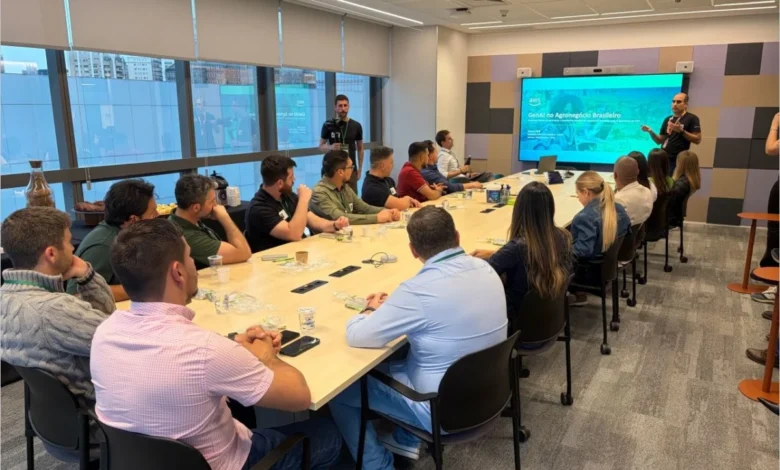
Cloud computing infrastructure and artificial intelligence deployment models are undergoing a fundamental transformation as enterprise organizations demand faster security responses, reduced architectural complexity, and more natural human-computer interfaces. In recent industry briefings, technology leaders have emphasized that traditional markets—ranging from heavy industrial logistics to large-scale agribusiness operations—are accelerating their adoption of advanced automation not as a novelty, but as a core competitive differentiator. As autonomous systems become deeply embedded in physical and digital operations, the infrastructure supporting them must evolve concurrently to handle heightened data throughput, advanced security threats, and complex hardware management requirements.
This week’s developments across Amazon Web Services (AWS) highlight this shift, led by major enterprise security rollouts, architectural simplifications for containerized workloads, and expanded generative artificial intelligence capabilities. These updates address critical operational friction points, offering enterprises tighter security guardrails, streamlined network management, and broader flexibility across specialized machine learning hardware.
Transforming Vulnerability Management with AWS Continuum
The security landscape for modern cloud architecture is defined by an increasingly compressed timeline between the public disclosure of a software vulnerability and its active exploitation by malicious actors. Historically, enterprise security operations relied on periodic vulnerability scans that generated extensive lists of potential flaws, leaving engineering teams to manually triage, prioritize, and patch systems over extended windows. Industry telemetry, however, demonstrates that this traditional model is no longer viable.
To address this paradigm shift, Amazon Web Services has announced the general availability of AWS Continuum, a comprehensive security service designed to fundamentally reframe vulnerability management from a passive reporting mechanism into an active, end-to-end remediation pipeline. Rather than simply delivering static severity labels, Continuum constructs a dynamic context graph by analyzing an organization’s code repositories and its active cloud environment. This graph correlates code dependencies with live infrastructure configurations to assess true exposure.
When a vulnerability is identified, Continuum evaluates its risk profile based on how closely an attack path runs to business-critical systems. Crucially, the service does not stop at detection; it attempts to reproduce exploitable findings within an isolated sandbox environment utilizing proof-of-concept code, providing security engineers with concrete visual evidence of the risk rather than abstract metrics. Once a vulnerability is verified and prioritized, Continuum automatically generates a pull request containing the necessary fix.
To maintain organizational trust and system stability, the current control boundary requires explicit human intervention. Security and engineering teams review, approve, and merge the generated pull requests. However, the architectural roadmap for the service anticipates the introduction of autonomous remediation classes gated behind strict confidence thresholds for routine patches. AWS Continuum is initially rolling out in the US East (N. Virginia) and US West (Oregon) regions, marking a significant step toward automated, context-aware application security.
The Shrinking Patch Window and Threat Intelligence Insights
The urgency behind automated remediation frameworks like AWS Continuum is underscored by recent data published by Amazon Threat Intelligence. Telemetry captured by internal honeypots—specifically tracking the exploitation of PHP2Shell vulnerabilities—revealed a stark reality regarding contemporary cyber threat lifecycles.
According to threat intelligence logs, exploitation attempts for the PHP2Shell vulnerabilities were actively recorded in MadPot telemetry on October 17. This activity occurred four days prior to the public disclosure of the underlying vulnerabilities, cataloged as CVE-2026-109618 and CVE-2026-109619. Furthermore, on the official disclosure day, verified proof-of-concept exploits were observed circulating across underground networks at approximately 02:00 UTC, a full twelve hours before the coordinated embargo was scheduled to lift at 14:00 UTC.
This empirical evidence fundamentally alters how security analysts view patch management. The traditional assumption that organizations possess a comfortable window of several days or weeks to apply security updates is obsolete. Attackers routinely weaponize vulnerabilities before vendors can publicly disclose them. Consequently, security audits and incident response strategies must now measure risk from the earliest known point of exploitation rather than the official CVE publication date. In tandem with the launch of Continuum, AWS published comprehensive AWS WAF (Web Application Firewall) mitigation rules designed to block exploitation vectors for these specific Remote Code Execution (RCE) vulnerabilities, providing an immediate defensive layer for exposed web applications.
Simplifying Container Exposure with Amazon ECS Gateway

Beyond security automation, enterprise cloud architects frequently grapple with the operational overhead of managing ingress traffic for containerized applications. Traditionally, exposing services running on Amazon Elastic Container Service (ECS) required complex coordination between network infrastructure teams—who manage subnets, security groups, and Application Load Balancers (ALBs)—and application developers who manage routing rules and target groups.
To eliminate this operational friction, AWS has introduced Amazon ECS Gateway. This new architectural construct cleanly separates network management from application deployment. Under this model, platform and network engineering teams define a centralized gateway configuration encompassing organizational subnets, core security groups, TLS certificates, listener settings, and associated AWS WAF web access control lists (web ACLs).
Application teams can then independently opt in to the gateway by attaching a simple gateway connector to their individual service definitions. Upon connection, the ECS control plane automatically provisions an AWS Certificate Manager (ACM) certificate, a unique DNS hostname, precise listener rules, a dedicated target group, and a security group that restricts incoming traffic strictly to the authorized Application Load Balancer.
The economic and operational efficiencies of this architecture are substantial. A single ALB can now efficiently share traffic across up to 25 distinct microservices. ECS handles the lifecycle management of the load balancers entirely behind the scenes, provisioning the initial ALB upon the first service connection and automatically deprecating and removing it when no longer required. Furthermore, a single gateway can associate with up to 10,000 individual clusters, with a maximum of five gateways permitted per cluster.
Organizations can adopt ECS Gateway incrementally using standard update procedures via the UpdateService API, allowing existing load balancing configurations to remain undisturbed during migration. Amazon ECS Gateway is available at no additional charge in all commercial regions where Amazon ECS is supported.
Expanding Multilingual Generative Voice Interfaces
As artificial intelligence permeates diverse operational sectors—ranging from urban financial institutions to remote agricultural enterprises—the primary interface for human-computer interaction is shifting rapidly away from traditional graphical screens. In sectors where end users frequently operate machinery or navigate field environments, voice interfaces represent the most practical medium for software engagement.
Reflecting this demand, Amazon Polly has rolled out a major upgrade to its generative speech synthesis engine. The expanded catalog now encompasses 57 distinct generative voices spanning 11 languages and 25 locales. The update introduces 14 new voices across nine locales, bringing Hindi and Finnish generative capabilities to general availability for the first time.
Of notable significance for Latin American markets, the update adds two new Brazilian Portuguese voices, designated Leo and Carolina. Designed as a seamless drop-in upgrade, the enhanced engine preserves existing voice identifiers, standard API calls, and pricing structures while delivering significantly more natural intonation, cadence, and emotional nuance. For mobile workers and field operators interacting with enterprise software via hands-free environments, these advanced speech models provide a frictionless communication channel.
Hardware Flexibility and Native PyTorch Integration for Trainium
The ongoing expansion of generative artificial intelligence workloads continues to drive intense demand for specialized machine learning silicon. Historically, optimizing deep learning models for custom hardware accelerators required extensive code rewrites, creating tight vendor lock-in and high engineering friction.
AWS is working to mitigate this constraint through the public beta release of TorchNeuron, an open-source PyTorch backend designed to provide native support for AWS Trainium accelerators. TorchNeuron allows engineering teams to execute complex model training and inference workloads directly on Trainium silicon simply by modifying instantiation commands to route through .to('neuron'), preserving eager execution modes and torch.compile optimizations without requiring architectural code overhauls.
Integrating directly with the Neuron Kernel Interface for custom operator deployment, TorchNeuron supports both Trainium2 and Trainium3 instances, alongside the concurrent release of AWS Neuron 2.33. This hardware abstraction strategy aligns with broader enterprise goals to decouple software development from proprietary hardware lifecycles, ensuring that performance optimization does not compromise long-term software portability.

Streamlining Model Customization on Amazon SageMaker AI
Managing specialized GPU infrastructure for custom machine learning model training has long presented a significant operational barrier for enterprise development teams. To alleviate this burden, AWS has announced the general availability of dedicated training sessions within Amazon SageMaker AI.
This capability hands developers complete control over the post-training loop—including the implementation of custom loss functions and specialized reward signals—while delegating the heavy lifting of GPU resource allocation, distributed execution orchestration, fault recovery, and checkpoint storage entirely to the managed service. The billing structure is directly tied to the volume of tokens processed by SageMaker AI, with the metering clock pausing automatically while custom reward functions compute batch evaluations.
This release is complemented by dedicated training session APIs and expanded foundation model support, introducing native integration for Muse Glimmer, Qwen 3.8, and Ministral 3. These additions provide developers with granular customization pathways without the capital expenditure and operational complexity of maintaining dedicated training clusters.
Enterprise Data Infrastructure and Modernization Milestones
In addition to advancements in artificial intelligence and security, enterprise database and caching architectures continue to receive critical modernization updates aimed at eliminating operational downtime.
Amazon ElastiCache Serverless for Valkey has introduced native support for zero-downtime online migrations. Organizations operating self-managed Valkey or Redis OSS deployments on Amazon EC2 can now migrate their datasets directly into ElastiCache Serverless without incurring client-side application errors or service interruptions. The migration workflow permits database administrators to prepare the target environment, initiate continuous data synchronization, and execute manual or automated cutovers without relying on third-party replication utilities. This migration path is now available across all commercial regions, China regions, and AWS GovCloud (US) environments.
Concurrently, large-scale database modernization milestones highlight the viability of migrating massive relational databases to managed cloud services. U.S. Bank recently completed the migration of four legacy Oracle Exadata databases, totaling approximately 119 terabytes of production data, to Amazon RDS for Oracle. Utilizing a configuration-driven migration pipeline powered by Oracle XTTS (Cross Platform Transportable Tablespaces), AWS DataSync, and Amazon EFS, the initial baseline data transfer was completed in approximately seven days over a bandwidth-constrained Direct Connect link, achieving zero data loss and maintaining average cutover windows of just four hours per database.
Looking Ahead: Industry Events and Community Engagement
As these technological capabilities mature across the cloud ecosystem, industry stakeholders are preparing to examine real-world deployments and architectural best practices at upcoming global gatherings. The annual AWS re:Invent conference is scheduled to run from November 30 to December 4 in Las Vegas, featuring an extensive catalog of over 2,200 technical sessions, workshops, and architectural chalk talks, with reserved seating now active for registered attendees. Additionally, regional technical communities will conclude their annual calendars with events such as AWS Community Day Brasil Norte, taking place in Belém on October 31.
Through continuous hardware abstraction, automated defensive security frameworks, and refined container management interfaces, AWS continues to shape the foundational layers of modern enterprise engineering, establishing rigorous standards for scalability, reliability, and operational efficiency in cloud-native environments.
Related posts: