The digital commerce ecosystem is undergoing a profound structural shift as software providers rush to equip merchants with tools capable of navigating an increasingly automated, multi-channel marketplace. With consumer expectations shifting toward instantaneous service, conversational shopping, and personalized experiences, platform developers have accelerated product rollouts. This week’s wave of updates highlights a heavy emphasis on artificial intelligence integration, cross-border fulfillment optimization, and sophisticated fraud prevention measures designed to protect both retailers and consumers from evolving digital threats.
Industry analysts point out that these technologies are no longer futuristic luxuries but baseline necessities. As the holiday shopping season approaches, brands face mounting pressure to streamline operations, reduce overhead costs, and meet buyers wherever they choose to interact—whether on traditional mobile applications, emerging AI-driven chat platforms, or physical point-of-sale terminals. Below is a comprehensive overview of the latest product releases, strategic partnerships, and platform updates designed to shape the future of modern merchant operations.
AI Discovery and Agentic Commerce Redefine Retail Search
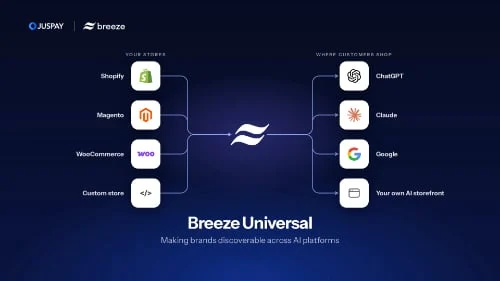
The discovery phase of the consumer journey is experiencing a radical decentralization. No longer confined to traditional search engines, shoppers increasingly rely on conversational artificial intelligence platforms and automated assistants to find products. To help brands capitalize on this trend, payment technology company Juspay has launched Breeze Universal. This innovative solution connects directly to a business’s existing product catalogs hosted on major platforms such as Shopify, WooCommerce, or custom-built architectures. By bridging the gap between back-end inventory and front-end AI platforms like ChatGPT and Claude, Breeze Universal ensures that a brand’s merchandise is discoverable across the exact surfaces where modern consumers browse, compare, and buy.

Parallel to this development, AI pioneer Anthropic has released a new suite of AI agent blueprints tailored specifically for retailers and merchants. As demand for conversational search tools surges ahead of the peak holiday shopping season, these blueprints empower businesses to construct proprietary shopping agents on the Claude framework. Retailers can deploy agents capable of offering real-time inventory suggestions, dynamic pricing adjustments, and automated marketing campaigns. Simultaneously, shoppers benefit from intuitive, conversational interfaces that can seamlessly recommend products and add items directly to shopping carts based on nuanced, open-ended queries.
To ensure that brands remain visible within these complex AI recommendation engines, Bazaarvoice has introduced an AI visibility package. Designed to optimize user-generated content (UGC) and brand assets, the platform structures authentic customer feedback so that AI algorithms can easily parse, cite, and recommend it. Furthermore, Bazaarvoice has partnered with specialized measurement providers—including Bluefish, Evertune, and Profound—to offer an independent analytics layer. This tracking mechanism measures how frequently and favorably a brand’s content appears in AI-generated answers, giving merchants quantifiable data on their algorithmic footprint.
Omnichannel Fulfillment and Global Expansion
Fulfillment logistics remain a critical bottleneck and a major differentiator for scaling merchants. Addressing the complex interplay between physical retail spaces and digital storefronts, Lightspeed Commerce has announced a strategic integration with logistics software provider ShipStation. By embedding ShipStation’s advanced shipping and fulfillment capabilities directly into the Lightspeed point-of-sale ecosystem, the partnership enables retailers to manage in-store and online orders from a single dashboard. Combined with automated tax calculations, the integration removes much of the operational friction traditionally associated with omnichannel retail.
International expansion has also received a significant boost from global freight forwarder and logistics platform Flexport. The company has officially launched comprehensive fulfillment services in Mississauga, Canada, and Manchester, England. This expansion allows international brands to store inventory locally and fulfill orders directly within these vital regional markets while maintaining their existing account teams, freight frameworks, and customs relationships. By handling local customs clearance natively and keeping returns processing localized within the destination country, Flexport aims to lower the total cost of cross-border trade for growing merchants.

Advanced Customer Experience and Post-Purchase Innovation
Customer retention increasingly relies on what happens after the initial transaction concludes. Capitalizing on this reality, AfterShip has debuted "AfterShip Intelligence," a post-purchase platform designed to transform traditional tracking and returns from a cost center into an active revenue driver. Utilizing agentic automation, the AI-powered system proactively identifies shipment glitches, gathers contextual logistics data, recommends viable resolutions, and executes routine tasks. To maintain operational safety, the platform enforces strict governance: human approval is mandatory for any financial or customer-facing decisions, ensuring that automation enhances rather than compromises the customer relationship.
Customer feedback management is also undergoing an AI-driven transformation. Alchemer has launched Iris, an AI-native customer experience platform built to synthesize qualitative feedback across surveys, online reviews, and reputation management channels. Iris is engineered to autonomously respond to reviews, trigger targeted customer follow-ups, and extract actionable business insights, feeding them directly into the enterprise systems that internal teams already use daily.
Wholesale operations are likewise benefiting from specialized software enhancements. WizCommerce has launched WizCRM, an AI-first customer relationship management platform tailored for B2B distributors and manufacturers. Equipped with an integrated AI sales assistant dubbed WizPilot, the system enables sales teams to manage complex accounts, log visits, draft quotes, and instantly convert them into Enterprise Resource Planning (ERP)-synced orders.
Payments, Security, and Emerging Retail Formats
Financial technology innovations continue to lower barriers to entry for small businesses while introducing new security paradigms. Ecommpay has introduced QR Code Payments, a versatile tool that provides merchants with a single, static QR code deployable across printed signage, paper receipts, or digital web pages. Customers can easily scan the code to select their preferred payment amount, while merchants retain full control over the aesthetic design of the checkout interface. The code remains active indefinitely until the merchant explicitly deactivates it.

In the realm of Buy Now, Pay Later (BNPL) services, ecommerce platform Shopline has selected Splitit as its exclusive card-linked installment partner. This integration allows hundreds of thousands of merchants worldwide to activate installment payment options effortlessly. Crucially, consumers can pay over time using their existing credit cards without undergoing cumbersome new credit checks or opening separate accounts.
Security and fraud prevention have also taken center stage, particularly regarding consumer communications and account verification. Amazon has rolled out a new verification feature within its Alexa for Shopping ecosystem in the United States. U.S. customers can now ask Alexa to verify the authenticity of incoming messages, emails, phone calls, or text messages allegedly originating from Amazon. Every inquiry helps the platform identify and dismantle bad actor networks. This builds upon Amazon’s earlier initiatives, which included establishing a dedicated email address and customer service verification forms.
To combat the growing complexity of agent-led transactions, Okta has introduced the Auth0 Identity Conversion Suite. Designed for modern digital environments, the suite helps businesses secure their applications and verify user identities across emerging commerce channels. By tracking user engagement from initial site visit through account creation, the identity management tool allows security teams to test and refine login and sign-up flows simultaneously without sacrificing user experience.
Creative Tools, Marketing Audits, and Channel Validation
Merchant software is increasingly catering to niche creative workflows and experimental marketing strategies. Sigmira is preparing to launch a dedicated product customizer designed specifically for WooCommerce merchants. The cloud-based tool empowers shoppers to personalize customizable items directly on a brand’s website and view real-time visual previews before finalizing their purchases. While Sigmira manages the complex rendering and workflow automation, merchants retain full control over product catalogs and order management within the familiar WooCommerce environment.

For email marketers, Listrak has released a free audit tool designed to evaluate retail marketing campaigns against thirty high-performing operational benchmarks. The tool assesses email deliverability, accessibility standards, mobile device optimization, content architecture, and conversion setup without requiring user sign-up.
Meanwhile, dropshippers looking to diversify their sales channels can now utilize a new micro-budget testing framework introduced by Crosslist. Designed to validate new marketplace opportunities for under ten dollars, the methodology encourages sellers to allocate minimal budgets, list controlled product selections, and analyze buyer behavior over a strict 14-to-30-day window. According to Crosslist, this data-driven approach helps merchants identify early demand signals and mitigate financial risk before committing capital to full-scale inventory expansion.
Finally, retail media and discovery formats continue to blur the lines between entertainment and commerce. India’s leading marketplace, Flipkart, has debuted a microdrama vertical within its primary shopping application. Integrated into the app’s "Play" and "Explore" content hubs through strategic partnerships with Pratilipi and Terribly Tiny Tales (TTT), the feature streams short-form narrative content designed to drive organic, content-led shopping discovery among millions of mobile-first consumers.
Related posts: