GitHub’s latest evolution of its Copilot ecosystem marks a definitive shift from simple code-completion assistance to an expansive, agentic framework designed to orchestrate the entire software development lifecycle (SDLC). Announced during the company’s annual GitHub Universe conference, these updates introduce a redesigned Copilot application and the "Copilot Projects" capability, which together aim to streamline how enterprise teams handle complex, multi-repository workflows.
The Shift to Agentic Development
For years, GitHub Copilot served primarily as an "autocomplete on steroids," assisting developers with boilerplate code, syntax suggestions, and individual function generation. However, the software industry is currently undergoing a structural pivot toward agentic workflows—where AI agents are tasked with higher-level goals, such as refactoring entire modules or addressing technical debt across multiple repositories.
The new GitHub Copilot app serves as a centralized "control center" for this activity. It allows developers to move beyond a single chat window, instead providing a persistent workspace where agents can digest project specifications, analyze telemetry, participate in design discussions, and—crucially—interact with external development tools. By feeding these agents context from Slack conversations, meeting notes, and architectural design documents, developers can offload the "how" of coding while retaining authority over the "what."
Chronology of GitHub’s AI Journey
To understand the significance of this update, it is necessary to look at GitHub’s trajectory over the last several years:
- 2021: The initial preview of GitHub Copilot launches, introducing the world to large-scale generative AI in the IDE.
- 2023: GitHub introduces "Copilot Chat," moving beyond just code generation into conversational debugging and unit test creation.
- 2024: The focus shifts toward "Copilot Workspace," which began experimenting with task-based development.
- 2026 (Present): The launch of the revamped Copilot app and Projects feature marks the transition to "Multi-Agent Orchestration," where the AI no longer just suggests code but manages the execution of complex project goals across the enterprise stack.
Projects and the Parallel Processing Paradigm
The most ambitious component of the new update is Copilot Projects. This feature enables developers to define a broader mission—such as "upgrade all microservices to the latest Java version" or "replace a deprecated authentication SDK"—and assign that mission to multiple agents running in parallel.
Once a goal is defined, the system breaks the objective into granular tasks. Agents then distribute these tasks across repositories, execute the necessary changes, and generate pull requests. This represents a significant leap in efficiency for large-scale application modernization, a process that has historically consumed thousands of man-hours in enterprise environments.
The Productivity-Complexity Paradox
While the promise of increased productivity is high, industry analysts caution that the transition to multi-agent environments introduces new technical and managerial challenges.
Amit Kumar Jena, AI development head at Kanerika, notes that while the ability to delegate tasks to cloud-based agents reduces the cognitive load of switching between tools, it fundamentally alters the developer’s role. "Developers are shifting from being ‘authors’ to ‘architects and reviewers,’" Jena explains. "The challenge now is not writing the code, but defining the task parameters and validating the output provided by the AI."
Furthermore, the "parallel execution" capability of Copilot Projects brings risks of architectural drift. As Abishek Satapathy, a principal analyst at Avasant, points out, "Agents operating in isolation can easily introduce conflicting changes. If two agents are tasked with upgrading dependencies in shared libraries, they may inadvertently create merge conflicts or break backward compatibility."
This concern is supported by academic research, including a 2026 arXiv study titled CooperBench: Why Coding Agents Cannot Be Your Teammates Yet, which observed that AI agents often struggle to maintain consistency when collaborating on shared tasks, sometimes performing 30% worse in group settings than they do individually.
Governance, Security, and Financial Implications
For Chief Information Officers (CIOs), the introduction of multi-agent systems necessitates a more rigorous approach to governance. As these agents gain the ability to commit code directly to repositories, the risk surface increases.
Security experts emphasize that organizations must implement "human-in-the-loop" safeguards. This includes:
- Branch Protection: Strictly enforcing that no agent-generated pull request can be merged without human verification.
- Agent Scoping: Limiting agent access to specific repositories rather than granting blanket permissions across the entire organization.
- Auditability: Integrating agent activity logs directly into SIEM (Security Information and Event Management) systems to ensure every line of code modified by an AI can be traced back to a specific session and owner.
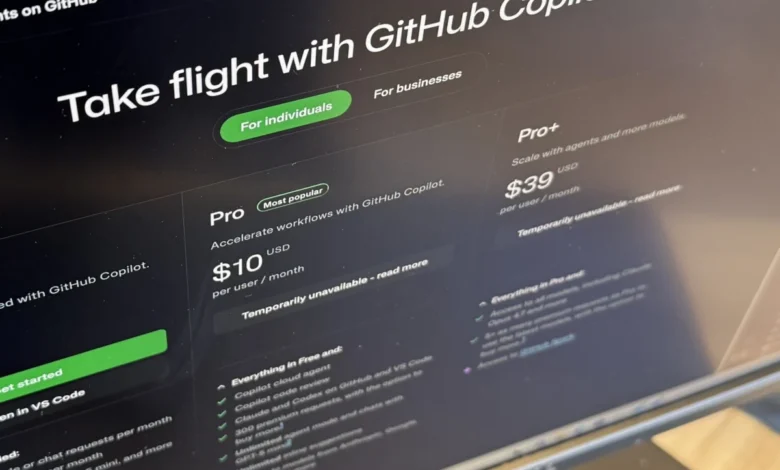
Furthermore, the economic model is shifting. GitHub’s transition to a consumption-based AI credit model—now bundled with GitHub Enterprise subscriptions—marks a departure from per-seat licensing. While this simplifies deployment, it also demands careful financial oversight. With different "tiers" of review—from Lite to the high-performance Max tier—costs can escalate quickly. GitHub estimates that a Max review costs approximately $10 per instance, compared to $0.25 for Lite. CIOs are advised to set granular credit limits at the project level to prevent "AI runaway costs."
The "Max" Tier: Improving Quality Control
GitHub is addressing the inherent fallibility of LLMs through its new "Max" tier of code review. Instead of relying on a single model to catch bugs, the Max tier deploys an ensemble of independent agents from various providers. An "aggregation agent" then parses the findings, reconciles discrepancies, and flags potential security vulnerabilities.
This "multi-expert" approach is designed to mitigate the hallucination and oversight problems common in single-model reviews. However, analysts maintain that this is not a panacea. "While an ensemble approach reduces the likelihood of missed authentication flaws or library vulnerabilities, it is not a substitute for comprehensive automated testing and human oversight," Satapathy says.
Implications for the Future of Software Engineering
The broader impact of these tools is a fundamental decoupling of software development from manual typing. By providing a platform that manages context across the entire stack—from Slack discussions to final code reviews—GitHub is effectively turning the repository into a collaborative space between humans and autonomous systems.
As these tools mature, the bottleneck in software development will likely shift away from technical execution toward quality assurance, system integration, and the ability to articulate business requirements clearly. For organizations, the competitive advantage will go to those who can successfully integrate these agents into a secure, governed, and cost-effective workflow.
The transition to an agentic, multi-repository development environment is no longer a theoretical exercise for early adopters; it is the new standard of the enterprise software industry. As GitHub continues to expand these capabilities, the challenge for development teams will be learning to manage the agents as effectively as they manage their own codebases. The coming year will likely be defined by the refinement of these "human-plus-agent" teams, with success being measured not by how much code is written, but by how reliably and securely these systems can modernize complex software architectures.