How to Spot a Fake Facebook Account a Mile Away
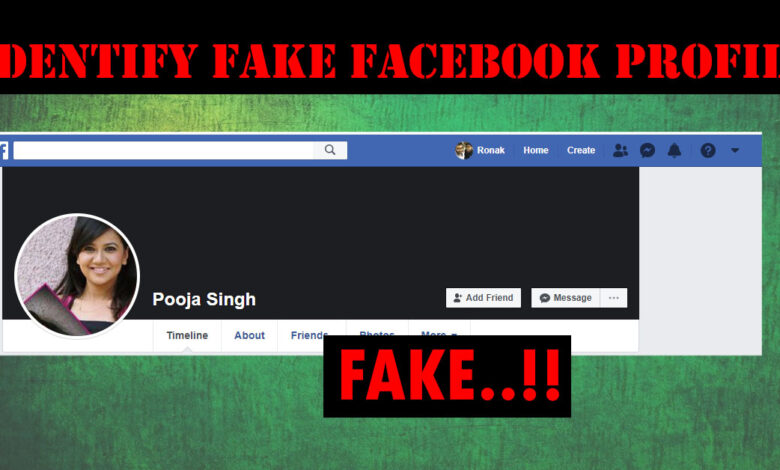
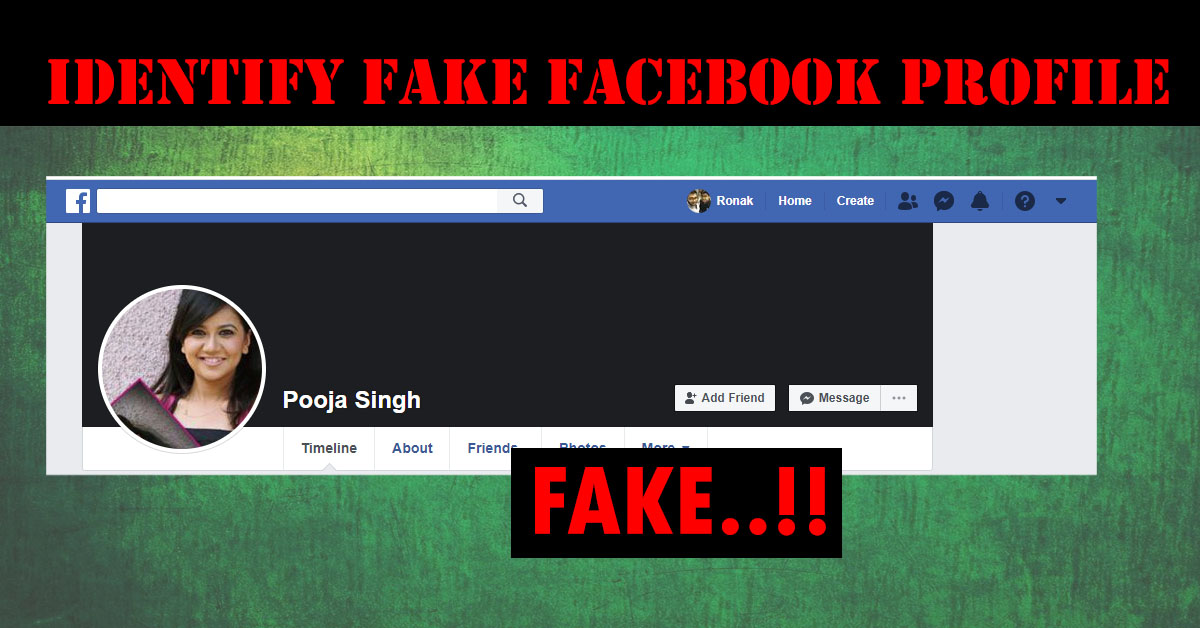
How to spot a fake Facebook account a mile away? This guide delves into the subtle and not-so-subtle signs that a Facebook profile might not be what it seems. From scrutinizing profile pictures to evaluating friend connections, we’ll uncover the telltale red flags that can help you quickly identify inauthentic accounts. Don’t get caught off guard by a fabricated persona – learn how to protect yourself online.
Navigating the complexities of social media requires a discerning eye. Fake accounts, designed to deceive, can easily blend in with legitimate profiles. However, by understanding the patterns and inconsistencies that often accompany fraudulent accounts, you can distinguish the genuine from the fabricated. This guide provides practical tips and methods to help you assess profiles with a critical eye and protect yourself from online scams and misinformation.
Identifying Suspicious Profiles: How To Spot A Fake Facebook Account A Mile Away
Spotting a fake Facebook account isn’t about intuition; it’s about recognizing patterns of inauthenticity. A critical eye and awareness of common red flags can help you distinguish genuine profiles from those designed to deceive or mislead. Careful scrutiny of a profile’s details can often reveal inconsistencies that point towards a fabricated identity.Careful evaluation of profiles is crucial to avoid falling victim to scams, misinformation, or unwanted interactions.
A lack of vigilance can lead to exposure to harmful content or the development of false connections. Therefore, it’s essential to develop a discerning approach when engaging with Facebook profiles.
Common Red Flags
Understanding the common indicators of fake accounts is the first step in navigating the platform safely. These red flags can vary in subtlety but collectively point towards a profile’s lack of authenticity.
Spotting a fake Facebook account is often easier than you think. Look for unusual activity, like a sudden influx of friend requests or a suspiciously empty profile. Also, be wary of accounts that post cryptic or unsettling content, particularly those relating to potentially harmful or illegal topics like dark posts. These accounts are often a red flag and can easily be avoided.
Finally, check for inconsistencies in the profile picture, name, and other details to verify authenticity.
- Inconsistencies in profile information: A profile with significantly different details across various social media platforms, or an account that refuses to share basic information about themselves or their life, can be a red flag. For example, a profile claiming to be a student at a prestigious university but with no prior education history might raise suspicion.
- Suspicious profile pictures and cover photos: Fake accounts often use generic or stock images, or pictures of famous people. The absence of a personal or unique photo, or a picture that appears overly posed or staged, is a sign of suspicion. Also, a profile picture that looks suspiciously similar to another account should be examined closely.
- Limited or unusual activity level: A profile with a history of only a few posts, particularly those made in a short period, or one that lacks engagement with other users, is unusual. Furthermore, an account that posts excessively or has an extremely high number of posts with no real connection is also suspicious.
- Uncharacteristic or inappropriate posting history: The content shared by the profile might not align with the stated interests or background. For instance, an account supposedly representing a business professional might share controversial or irrelevant content.
- Rapidly expanding friend network: An account that rapidly adds a large number of friends in a short time frame, especially with a lack of engagement, is a likely sign of inauthenticity. This is often seen in spam accounts.
Scrutinizing Profile Pictures and Cover Photos
A profile’s visual representation is often the first point of contact. Pay close attention to the details.
- Generic or stock photos: The use of stock images or generic pictures instead of a personal photo is a common tactic. This suggests the account may be a bot or a fraudulent one.
- Overly posed or staged pictures: Profile pictures that look too perfect or posed, or those that appear staged, may indicate the account is not genuine.
- Pictures of famous people: Using pictures of famous people without their consent can raise suspicion.
Evaluating Profile Activity and Posting History
Assessing a profile’s activity is another crucial aspect of identifying inauthenticity.
- Limited activity: A profile with a history of only a few posts, particularly those made in a short period, is suspicious. This could indicate an attempt to create a presence quickly without genuine interest.
- Unusual posting patterns: Inconsistent posting schedules, sudden changes in posting frequency, or an unusually high number of posts, especially with no real connection, are red flags.
- Lack of engagement: A profile with very little interaction with other users or groups, or one that doesn’t participate in conversations, could indicate the account is not active.
- Suspicious content: The profile’s content might not align with the stated interests or background. An account that frequently posts unrelated or inappropriate content, such as scams, should be questioned.
Examples of Unusual Activity Patterns
| Red Flag | Description | Explanation |
|---|---|---|
| Sudden increase in friends | A profile that adds many friends within a short time without meaningful interactions. | This is a common tactic used by spam accounts or fake accounts to quickly gain visibility or spread content. |
| One-sided communication | The profile primarily initiates contact but rarely responds to others. | This could be a bot or a profile designed to spread misinformation without genuine engagement. |
| Frequent posting of promotional content | The profile posts a large number of advertisements or promotional materials without genuine content. | This could be a profile designed for marketing purposes or scams. |
Assessing Account Information
Unveiling the truth behind a Facebook profile often involves a critical eye for detail, scrutinizing the information presented. A careful examination of biographical details, contact information, and credentials can reveal inconsistencies that point to a fake account. This meticulous process allows you to distinguish between genuine profiles and those designed to deceive or mislead.This section delves into identifying inconsistencies in account information, demonstrating methods for verifying the validity of provided details.
We’ll explore the importance of scrutinizing dates of birth, locations, employment history, contact information, and educational or professional credentials. Recognizing these discrepancies is crucial in maintaining a secure and trustworthy online experience.
Identifying Inconsistencies in Biographical Information
Biographical details, such as date of birth, location, and employment history, are often crucial pieces of information that help confirm a profile’s authenticity. Discrepancies in these details can raise significant red flags. For example, a profile claiming to be located in one city but containing contact information tied to a different city could signal a potential issue.
Spotting Discrepancies in Dates of Birth, Location, and Employment History, How to spot a fake facebook account a mile away
Carefully scrutinize the provided date of birth, location, and employment history. Compare this information against other publicly available sources, such as social media profiles or professional networking sites. Inconsistencies, such as a significantly different date of birth, an improbable employment history, or a location that doesn’t align with other information, should be thoroughly investigated. A seemingly plausible history should still be examined against readily available public information.
Verifying the Validity of Contact Information
Contact information, including email addresses and phone numbers, plays a critical role in validating a profile. Attempt to independently verify these details by contacting the listed email address or phone number, if possible. If the contact information is not readily verifiable or appears unusual, it’s a cause for concern.
Verifying Authenticity of Educational or Professional Credentials
Educational and professional credentials, such as degrees or certifications, should also be scrutinized. Check if the claimed credentials are valid and consistent with other information presented. Look for official seals, certifications, or other confirmations that corroborate the information. If possible, attempt to cross-reference the details against official institutions or databases.
Verifying Account Information: A Summary Table
| Inconsistency Type | Example | Potential Red Flag | Verification Method |
|---|---|---|---|
| Date of Birth | Profile claims to be 25, but other information suggests they are 35. | Significant age discrepancy. | Check other sources, social media profiles, or professional networks. |
| Location | Profile claims to be in New York, but the listed phone number suggests a location in California. | Location mismatch. | Verify phone number location, or contact the listed number. |
| Employment History | Profile claims to have worked at a company, but there’s no record of that employment. | Improbable or non-existent employment history. | Search for the company, and cross-reference the profile information. |
| Contact Information | Email address looks unusual, or a non-existent email is used. | Suspicious email address. | Try contacting the listed email address, or search for the email address. |
| Credentials | Profile claims a degree from a university, but the institution doesn’t have a record of that student. | Fake or unverifiable credentials. | Contact the university or look for verification of the degree. |
Evaluating Connections and Friends
Uncovering fake Facebook accounts often hinges on scrutinizing the connections and friendships displayed. Genuine accounts typically reflect a realistic social network, while fraudulent profiles may exhibit unnatural patterns or inconsistencies. Analyzing friend lists and interactions can significantly enhance your ability to distinguish between authentic and fabricated profiles.A genuine Facebook account typically boasts a friend list that mirrors the user’s real-life social circle.
This includes connections from various stages of life, like school, work, and shared interests. Conversely, fake accounts frequently have inflated or drastically different friend counts, often lacking depth and variety in their connections.
Friend Count Discrepancies
Understanding the typical friend count range for a genuine account is crucial. A user with a limited social circle might have fewer friends, while someone actively engaged in online communities could have a larger network. A profile with an extraordinarily high or low friend count, particularly when compared to other profiles with similar activity, warrants further investigation. For instance, a profile with 5,000 friends but only a handful of posts and interactions could raise suspicion.
Similarly, a profile with only a few friends, despite being active on the platform, may also be a red flag.
Identifying Unusual Friend Requests or Connections
Unusual friend requests or connections often signal a fake account. These might include requests from profiles with incomplete information, profiles that seem suspiciously similar to other profiles, or requests from accounts with highly unusual names or locations. For example, a request from someone claiming to be a famous athlete, but with no verified connections or a suspiciously generic profile picture, should be treated with skepticism.
Also, a large number of friend requests from profiles that are all very similar in appearance or content might be a sign of a bot or coordinated effort to inflate the account’s connections.
Red Flags Associated with Sudden Changes
A sudden surge or drop in friends can also be a warning sign. If a profile seemingly gains hundreds of friends overnight, or loses almost all their friends in a short time, it could indicate an attempt to inflate the account’s influence or a possible account suspension or closure. This sudden change is often a clear indicator of manipulation.
For example, a celebrity account might see a dramatic increase in friends shortly before a major announcement, potentially used to artificially inflate engagement metrics.
Spotting Fake Accounts Based on Connections
Assessing the profiles of friends can reveal further inconsistencies. If the majority of a profile’s friends exhibit similar characteristics—e.g., unusual names, missing profile information, or a lack of engagement—the original profile may be fake. A user with a significant number of seemingly inactive or suspicious connections is likely to be less credible. The profiles of friends should ideally reflect diverse backgrounds and interests.
Spotting a fake Facebook account is easier than you think. Look for suspicious profiles – a lack of profile picture, unusual activity, or a username that doesn’t quite match the person’s name are red flags. Also, businesses are increasingly using tools like GaggleAmp for marketing, which can sometimes be abused by fraudsters. To learn more about why businesses utilize GaggleAmp, check out this helpful article: 5 reasons businesses take advantage gaggleamp.
Ultimately, if something seems too good to be true or too perfect, it probably is. Keep your guard up and verify everything you see before engaging with any profile online.
Probability Table of Fake Account Based on Connection Patterns
| Connection Pattern | Probability of being a fake account | Example |
|---|---|---|
| Extremely high or low friend count with little interaction | High | 5,000 friends, but only 5 posts in 6 months |
| Sudden surge or drop in friends | Medium | Gaining 500 friends in 24 hours |
| Friends with similar, suspicious profiles | Medium-High | All friends have similar usernames and generic profile pictures |
| Unusual or suspicious friend requests | Medium | Friend requests from profiles with incomplete information |
| Lack of diverse connections | Low | Friends primarily from one specific area or with a limited set of interests |
| All friends are inactive | High | All friends show little or no engagement with the platform |
Scrutinizing Content and Interactions
Spotting a fake Facebook account often hinges on more than just superficial profile information. Analyzing the content and interactions on the profile reveals subtle but crucial clues that can quickly tip you off. In this section, we’ll delve into the specifics of identifying inauthentic or suspicious content, focusing on language, style, and interaction patterns.Understanding the nuances of language and writing style can help you distinguish between genuine profiles and those designed to deceive.
Fake accounts often display inconsistencies and irregularities that betray their fabricated nature. Recognizing these inconsistencies is key to effective identification.
Identifying Inauthentic Content
Analyzing the content posted on a profile provides valuable insight into its authenticity. Look for posts that seem out of character, or that don’t align with the profile’s claimed interests or background. This might involve unusual topics, overly enthusiastic endorsements, or overly generic content designed to appeal to a wide audience. Fake accounts frequently attempt to mimic the language and style of real people, but often fall short in subtle, yet significant, ways.
Analyzing Language and Writing Style
The language used and the style of writing can be highly revealing. Fake accounts often struggle with grammar, spelling, and punctuation. The tone and vocabulary may be overly formal, overly casual, or simply inconsistent with the purported identity. Consider the overall flow of the writing; does it sound natural, or does it feel forced or robotic? This is where a keen eye and attention to detail can prove highly effective.
Examples of Content Generated by Fake Accounts
Fake accounts frequently post generic content designed to attract attention or build a following. They may share overly positive or negative opinions, make overly dramatic claims, or post content that is unrelated to their stated interests. These accounts often engage in “spamming” or “carpet bombing” of content to quickly amass followers. The content might also be highly promotional, with links to questionable or suspicious websites.
Ever wondered how to sniff out a phony Facebook profile? Look for inconsistencies – a suspiciously generic profile picture or a bio that sounds too good to be true. Also, check out the latest news on boosting your brand presence, like breaking news how to promote your brand with twitter carousel ads. Learning to use Twitter carousel ads, for instance, can be a powerful way to expand your reach.
Ultimately, a lack of engagement, odd posting patterns, and an overall “off” vibe are great red flags for a fake Facebook account. So, keep your eyes peeled!
Detecting Automated or Unusual Interaction Patterns
Automated interaction patterns are a strong indicator of a fake account. This includes overly frequent or sudden increases in likes, comments, or shares. Look for a lack of genuine engagement, where comments are generic or superficial. Analyze the interactions with other profiles. Are they interacting with people they’re unlikely to know or engage with?
This can help pinpoint unusual activity.
Suspicious Content Examples
| Suspicious Content Example | Explanation |
|---|---|
| A profile claiming to be a renowned scientist posts about conspiracy theories. | This is highly suspicious, as it contradicts the assumed expertise and knowledge of a scientist. |
| A profile claiming to be a local business owner posts about international politics with no previous connection to the topic. | The lack of relevance and apparent knowledge of this area is a strong indicator. |
| A profile posts a series of identical or highly similar comments on various posts. | This suggests automated interaction, a common tactic of fake accounts. |
| A profile posts a multitude of self-congratulatory posts with few genuine interactions. | This shows a lack of genuine engagement and an over-emphasis on personal promotion, which is common in fake accounts. |
Verifying Account Details
Spotting a fake Facebook account can be tricky, but verifying details can often be the crucial step in determining authenticity. This involves more than just a quick glance at a profile; it requires a proactive approach to cross-checking information. The key is to move beyond the profile itself and explore other avenues for confirmation.A crucial aspect of verifying a Facebook account is to contact the individual directly.
This direct interaction provides an immediate opportunity to confirm their identity and establish a connection. Be cautious and remember that interactions should always be approached with a healthy dose of skepticism, particularly if you’re encountering the profile for the first time.
Contacting the Individual Directly
Establishing contact with the individual through other means is vital. This could involve sending a private message or initiating a phone call, if appropriate. Direct communication allows for personal verification and the opportunity to verify details not easily accessible on the profile itself. Asking simple, clarifying questions about their interests, recent events, or past experiences can provide valuable insights.
Verifying Information on Other Platforms
Expanding your verification efforts to other social media platforms or websites can yield valuable information. Often, a person’s presence on other sites can corroborate or contradict the information presented on their Facebook profile. For instance, a potential mismatch between details on Facebook and LinkedIn might signal a discrepancy worth investigating further. Checking for the same user name or profile picture on other sites is a simple, effective method for confirming identity.
Examples of Sites for Confirmation
Several platforms can be helpful in verifying account details. LinkedIn, Twitter, and Instagram are examples of platforms that often host a user’s profile. Even a simple Google search for the individual’s name can sometimes reveal relevant information. This could include their professional background, recent activities, or connections. Consider checking their online presence in relation to other platforms.
Reporting Suspicious Accounts to Facebook
Facebook provides a robust system for reporting suspicious accounts. Using the platform’s reporting tools is an important step in protecting the platform from malicious activity. This process often involves providing specific details about the suspicious profile, such as the nature of the suspicious activity or content. Thoroughly documenting the suspicious aspects will assist Facebook’s moderation team.
Table of Verification Methods
| Verification Method | Pros | Cons |
|---|---|---|
| Direct Contact (Message/Call) | Direct confirmation, opportunity for clarification, builds trust | May not be possible for all profiles, potential for misrepresentation |
| Cross-platform Verification (LinkedIn, Twitter) | Provides additional data points, increases confidence in identity | May not always have a corresponding profile on other platforms, some platforms may not be public |
| Third-Party Information (Google Search) | Easy access to public information, broadens search scope | Information may be outdated, accuracy of results varies |
Analyzing Account Behavior
Unmasking fake Facebook accounts often hinges on recognizing subtle yet significant anomalies in account activity. Beyond just looking at the profile itself, scrutinizing how the account interacts and posts provides crucial clues. Understanding typical posting patterns and identifying deviations from the norm can help you differentiate between genuine users and those with less than honest intentions.
Suspicious Account Activity Indicators
Account activity patterns are a key indicator of authenticity. A consistent pattern of unusual behavior, like a sudden surge in posts or an abrupt change in posting times, can raise red flags. The frequency and timing of posts, coupled with other factors, can reveal inconsistencies that point to a fake account.
Unusual Posting Frequency and Times
Determining normal posting frequency for a user is crucial. Analyze the account’s historical activity to establish a baseline. If a sudden spike or drastic decrease in posts occurs, it deserves investigation. Similarly, unusual posting times, such as posting at 3 AM when the user is likely asleep, should be examined alongside other factors. Consider the time zone of the user and the account’s location, which may provide context.
If an account consistently posts at odd hours or on unusual days, it warrants closer scrutiny.
Checking Account Activity History
Access to the account’s activity history is vital for comprehensive analysis. Facebook provides tools to review past posts, interactions, and friend requests. This historical data offers insight into the account’s evolution and can reveal inconsistencies. Analyzing trends and patterns in this activity history can unveil anomalies that might suggest a fake account.
Table: Suspicious Account Activity Patterns
| Behavior | Frequency | Description |
|---|---|---|
| Sudden increase in posts | Significant spike | A drastic jump in posts compared to the account’s typical posting rhythm. This could indicate automated posting or multiple accounts acting in concert. |
| Abrupt decrease in posts | Significant drop | A sudden cessation of posts after a period of regular activity. This might signal the account being deactivated or being managed by a different party. |
| Unusual posting times | Inconsistent | Posts occurring at times that are significantly different from the account’s usual posting schedule. Consider the user’s probable schedule and location. |
| Repetitive content | High | Posts that are almost identical or very similar to one another. This pattern can point to automated posting or an attempt to manipulate metrics. |
| Rapid friend requests | High volume | A large number of friend requests in a short time frame. This may be an attempt to artificially inflate the account’s social standing or generate false connections. |
Final Summary
In conclusion, spotting a fake Facebook account requires a multifaceted approach. By meticulously examining profile details, connections, and content, you can often detect inconsistencies and red flags that signal an inauthentic presence. Don’t be afraid to utilize the resources available to verify information and report suspicious accounts. By arming yourself with the knowledge presented in this guide, you can confidently navigate the online landscape and protect yourself from potential harm.