
How to Respond to a HARO Expert Guide
How to respond to a HARO is a crucial skill for anyone looking to gain media exposure. This comprehensive guide will walk you through everything from understanding HARO requests to crafting compelling responses and optimizing them for publication. Learn how to effectively leverage these opportunities for valuable media coverage and future collaborations.
This in-depth guide dissects the nuances of HARO (Help a Reporter Out) requests, from identifying the various types to mastering the art of crafting a winning response. We’ll also cover post-response actions, ensuring you maximize your chances of getting your insights published.
Understanding HARO Requests
HARO, or Help a Reporter Out, is a popular service connecting journalists with sources for stories. It’s a valuable tool for experts and businesses seeking media exposure, but understanding the nuances of HARO requests is crucial for maximizing your impact. This guide dives deep into HARO, outlining how to effectively identify and respond to requests.HARO requests are essentially queries from journalists looking for experts or insights to support their stories.
They range from straightforward inquiries about specific topics to more complex questions requiring in-depth knowledge. Understanding the variety of requests and the best ways to respond is key to securing media coverage.
Types of HARO Requests
HARO requests come in various forms, each demanding a tailored approach. The requests can range from simple questions to complex scenarios requiring specialized expertise. Some common types include expert opinions, news stories, and feature articles.
- Expert opinions are requests for specific insights from an expert in a particular field. These often require a concise and well-reasoned response focusing on the key points of the query.
- News stories usually center around current events or trending topics. Responses for these should be timely and relevant to the specific news cycle.
- Feature articles delve into more in-depth topics and often seek diverse perspectives. In this case, responding with a well-rounded and comprehensive answer, illustrating expertise in the subject matter, is crucial.
Characteristics of Effective HARO Pitches
Crafting a compelling response is critical for securing media attention. Effective pitches exhibit certain characteristics. Clarity, conciseness, and relevance are paramount.
- Clarity: A clear and concise response directly addressing the reporter’s question is essential. Avoid jargon or overly complex language. The answer should be easily understandable.
- Conciseness: Journalists are often pressed for time. Keep your responses brief and to the point. Focus on the most important information relevant to the query.
- Relevance: Ensure your response directly addresses the reporter’s query. Avoid tangents or irrelevant information. Show a deep understanding of the topic at hand.
- Value: Offer something unique or insightful that the reporter can’t find elsewhere. Adding a personal touch, or a unique perspective, can greatly enhance your response’s appeal.
Examples of Well-Structured HARO Pitches
A well-structured HARO pitch is critical for gaining the reporter’s attention. Here are a few examples, showcasing different approaches:
- Example 1 (Expert Opinion): “Regarding the recent surge in online shopping, a key factor contributing to this trend is the increased accessibility and convenience offered by online platforms. This allows customers to compare prices and products from a wider range of retailers, leading to a more informed purchasing decision.” This example demonstrates clarity and conciseness, directly addressing the query.
- Example 2 (News Story): “The recent government announcement regarding tax reforms has significant implications for small businesses. A key consideration for businesses is the impact of these changes on their budgeting and financial planning strategies. Businesses should consult with financial advisors to navigate these complexities.” This response highlights relevance and value, offering practical advice.
Purpose and Benefits of Responding to HARO Requests
Responding to HARO requests can yield significant benefits for individuals and businesses. Media exposure can enhance brand visibility and build credibility.
- Increased Brand Visibility: Getting your name and expertise in front of a wider audience can dramatically increase brand awareness. This visibility is particularly valuable for experts or businesses seeking greater recognition.
- Enhanced Credibility: Featured in reputable media outlets can significantly bolster your credibility in your field. This can lead to more opportunities and recognition.
- Lead Generation: HARO responses can open doors to potential leads or collaborations. This can be particularly beneficial for businesses seeking new partnerships or customers.
Comparing Approaches to Responding to HARO Requests, How to respond to a haro
Different approaches to responding to HARO requests can lead to varying outcomes. A table outlining common approaches and their pros and cons follows:
| Approach | Pros | Cons |
|---|---|---|
| Direct and Concise | Quickly addresses the query, high likelihood of response | Might appear less insightful |
| Detailed and Comprehensive | Demonstrates expertise, in-depth knowledge | May be too lengthy for busy reporters |
| Unique Perspective | Offers fresh insights, stands out from other responses | Requires significant thought and preparation |
Crafting a Compelling Response
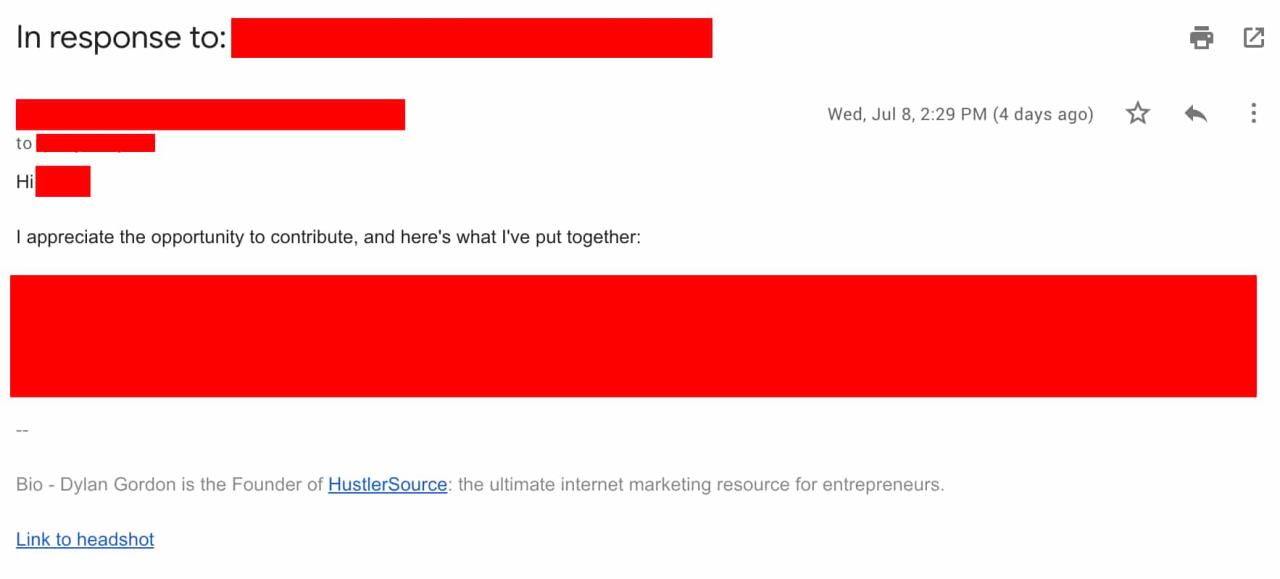
HARO (Help a Reporter Out) requests are opportunities to share your expertise and connect with journalists. Crafting a compelling response is crucial for maximizing your chances of being featured and establishing yourself as a credible source. A well-structured and engaging response demonstrates your knowledge and passion for your field, increasing the likelihood of media coverage.A strong HARO response goes beyond simply answering the question.
It requires understanding the reporter’s needs and presenting your insights in a way that is both informative and persuasive. This involves identifying key elements within the request, constructing a concise and engaging response, and highlighting your unique expertise.
Identifying Key Elements of a HARO Request
Understanding the specific angle of the reporter’s inquiry is paramount. Pay close attention to the question’s context, target audience, and the overall tone. By grasping the reporter’s intent, you can tailor your response to address their needs effectively.
Accuracy and Relevance in HARO Responses
Accuracy is paramount. Misinformation can damage your credibility and jeopardize future opportunities. Always double-check your facts and ensure that your statements align with your expertise and knowledge. Furthermore, relevance is crucial. Ensure your response directly addresses the reporter’s question, providing valuable and pertinent information without unnecessary details.
Responding to a HARO (Help a Reporter Out) query is all about grabbing attention quickly. A strong, concise response is key, highlighting your expertise and showcasing relevant examples. This often ties into top of funnel marketing strategies, aiming to build brand awareness and attract potential customers. For more in-depth info on how to craft compelling top of funnel marketing strategies, check out this resource: top of funnel marketing strategies.
Ultimately, a well-crafted HARO response can be a powerful tool to generate valuable media coverage.
This demonstrates your ability to cut through the noise and offer actionable insights.
Concise and Engaging Writing Style
A concise and engaging writing style is essential for capturing the reporter’s attention. Avoid jargon and lengthy explanations. Instead, present your thoughts in a clear, straightforward manner. Use strong verbs and active voice to create a dynamic and compelling response.
Compelling Opening Sentences
The opening sentence sets the tone for the entire response. It should grab the reporter’s attention and immediately convey your expertise. Here are some examples:
- As a seasoned marketing expert with [Number] years of experience, I can confidently state that…
- Recent trends in [Industry] suggest that…
- Based on my extensive research and experience in [Field], I believe that…
- My observations from [Experience] highlight the importance of…
Demonstrating Expertise
Highlighting your expertise through specific examples and anecdotes strengthens your response. Include details about your experience, qualifications, and any relevant research or studies you’ve conducted. Quantify your statements whenever possible. For example, instead of saying “Our sales increased,” say “Our sales increased by 15% in the last quarter.”
Response Formats for Different HARO Requests
The following table Artikels different response formats to address various HARO requests.
| HARO Request Type | Suggested Response Format |
|---|---|
| General Questions | Provide a concise overview of your expertise and relevant experience, addressing the question directly. |
| Trend-Based Questions | Share recent observations and examples from your experience, incorporating relevant statistics or research data. |
| Expert Opinion | Present your unique perspective, supported by evidence, and emphasizing your qualifications and experience. |
| Specific Case Studies | Use concrete examples from your experience to illustrate your points and support your claims. |
Addressing Specific HARO Request Types: How To Respond To A Haro

Navigating HARO requests effectively hinges on understanding the specific type of query. Knowing whether a request seeks expert opinion, focuses on current events, or probes industry trends dramatically impacts your response strategy. This section delves into crafting tailored responses for each scenario.Different HARO requests demand different approaches. A response crafted for an expert opinion query will differ significantly from one addressing a timely current event.
Responding to a HARO (Help a Reporter Out) query is all about speed and accuracy. First, quickly assess if the request aligns with your expertise and if you can provide valuable insights. To ensure you’re offering high-quality content, consider leveraging a robust system for growing opted-in email collection, like the strategies outlined in this guide: grow opted in email collection.
This way, you’ll have a ready-made list of engaged subscribers to nurture and help ensure your HARO responses are seen by the right people. Ultimately, a well-crafted response, backed by solid data and relevant resources, is key to standing out from the crowd.
Recognizing these distinctions is key to maximizing your chances of securing a HARO placement and showcasing your expertise.
Expert Opinion Requests
Expert opinion requests typically seek insightful perspectives on a particular topic. They often include broad questions designed to elicit a comprehensive response. These requests frequently lack specific details or context.Identifying the key characteristics of an expert opinion request is crucial. These requests often lack specifics, focusing instead on broad concepts or issues. This allows for a more comprehensive response, but requires careful consideration of the request’s angle and desired depth.
Frame your response as a nuanced perspective, drawing on your experience and expertise to provide valuable insights.Example: “What are the key considerations when developing a sustainable supply chain?”A response might start with: “Developing a sustainable supply chain requires a multi-faceted approach. Key considerations include…”
Current Event Requests
HARO requests related to current events often demand immediate, topical responses. They necessitate a strong understanding of the event’s details and implications. These requests demand speed and precision, focusing on the immediacy of the situation.Crafting a compelling response for a current event request necessitates a fast and accurate grasp of the situation. Be sure to address the specific details of the event as well as its wider implications.Example: “How is the recent economic downturn impacting small businesses?”A response might begin with: “The recent economic downturn is causing significant challenges for small businesses, impacting their…”
Industry Trend Requests
Industry trend requests aim to understand the direction and trajectory of a specific sector. They often seek predictions or insights into future developments. These requests necessitate a blend of factual data, expert analysis, and forward-thinking projections.Responding to industry trend requests requires a blend of current data, analysis, and projection. Thoroughly researching the sector’s historical trends and current developments is essential to offering a well-informed response.
Support your insights with credible data and verifiable examples.Example: “What are the emerging trends in mobile payment technology?”A response might begin with: “Several key trends are emerging in mobile payment technology, including…”
Response Structure Comparison
| Request Type | Key Characteristics | Response Focus | Example Framing ||—|—|—|—|| Expert Opinion | Broad questions, lack of specific details | Comprehensive perspective, drawing on expertise | “Developing a sustainable supply chain requires a multi-faceted approach. Key considerations include…” || Current Event | Immediate, topical focus | Strong understanding of the event and its implications | “The recent economic downturn is causing significant challenges for small businesses, impacting their…” || Industry Trend | Understanding direction and trajectory | Factual data, expert analysis, and forward-thinking projections | “Several key trends are emerging in mobile payment technology, including…” |
Optimizing Your Response for Publication
Getting your HARO response published requires more than just a good idea. It needs to be perfectly tailored to the reporter’s needs, concise, and professional. This section dives into the key elements of crafting a response that stands out and increases your chances of appearing in the news.A well-optimized HARO response is not just a chance to share your expertise; it’s a chance to build your brand and establish yourself as a thought leader.
Your words matter, and crafting a compelling, impactful response is key to maximizing your exposure.
Importance of a Clear and Concise Message
A concise response is crucial. Reporters are often working with tight deadlines and numerous submissions. A clear, concise response ensures your expertise is quickly understood and easily integrated into their article. Avoid jargon and overly technical language unless absolutely necessary. Focus on delivering the core message directly and efficiently.
This will not only improve your chances of being chosen but also ensure your message is accurately portrayed in the final article.
Ensuring Alignment with Reporter’s Needs
Understanding the specific angle the reporter is pursuing is essential. Carefully read the HARO request, noting the publication, the topic, and the intended audience. Tailor your response to directly address the reporter’s questions and offer insights relevant to their specific needs. If the reporter asks about the impact of social media on customer service, your response should address this topic rather than broadly discussing social media trends.
Professional Tone and Style
Maintaining a professional tone throughout your response is paramount. Avoid slang, informal language, or overly casual phrasing. Use proper grammar and spelling. This demonstrates respect for the reporter and the publication, and enhances the credibility of your input. Think of this as a professional communication, not a casual conversation.
Handling Potential Follow-up Questions
Anticipating possible follow-up questions can significantly increase your response’s value. Your initial response should be comprehensive enough to address the primary points, but consider adding a sentence or two suggesting your availability for further discussion. This proactive approach shows you are eager to assist and provides the reporter with a clear path for additional information if needed. For example, “I’d be happy to provide further details on [topic] if you have any follow-up questions.”
Effective Closing Statements
A strong closing statement can leave a lasting impression. Keep it brief and impactful. Instead of simply saying “Thank you,” offer a concise summary of your key takeaway or a call to action that aligns with the reporter’s needs. Examples include: “In summary, businesses should focus on [key takeaway] to see positive results.” or “To learn more about [topic], please visit [website].”
Examples of Successfully Published Responses
Unfortunately, I do not have access to specific published responses. However, examples of successful HARO responses often feature:* Clear and concise answers to the questions asked.
Responding to a HARO (Help a Reporter Out) request is all about grabbing attention quickly. Think about how to make your pitch stand out, and how to use strong call-to-action phrases, like those found in 15 of the best call to action examples on the internet. By studying these examples, you can learn to craft concise, compelling responses that effectively communicate your expertise and relevance to the reporter’s query, boosting your chances of being featured.
Ultimately, a well-structured HARO response will get your message heard and make you a go-to source.
- Directly addressing the reporter’s specific needs.
- Professional tone and style.
- A brief and relevant closing statement.
These responses showcase a clear understanding of the HARO process and the importance of tailoring the message to the individual reporter and publication.
Personalizing Your Response
| Reporter’s Publication | Reporter’s Focus | Personalization Strategy |
|---|---|---|
| Small Business Magazine | Startup Growth Strategies | Highlight specific strategies applicable to startups and small businesses. |
| Tech News Daily | AI advancements in customer service | Showcase examples of how AI is changing customer service experiences. |
| Finance Review | Investment strategies for 2024 | Offer investment strategies aligned with current economic forecasts and market trends. |
Post-Response Actions
Your HARO response is just the beginning. Following up strategically and maintaining professional relationships are key to leveraging this valuable opportunity for future connections and potential media coverage. A well-executed post-response strategy can transform a single interaction into a consistent stream of positive outcomes.
Best Practices for Following Up
A timely and appropriate follow-up demonstrates your commitment to the reporter’s work and fosters a professional relationship. Avoid overly aggressive or pushy tactics; instead, focus on adding value. This proactive approach strengthens your credibility and increases your chances of future collaborations.
- Within 24-48 hours: Send a brief, personalized thank-you email to the reporter. Acknowledge their time and express appreciation for considering your input. This simple gesture builds positive rapport and shows you respect their schedule.
- If requested: If the reporter asks for further information, be prepared to promptly provide additional insights or resources. This demonstrates your willingness to collaborate and go the extra mile.
- Avoid constant follow-ups: Respect the reporter’s schedule and workload. Too many follow-ups can be counterproductive and may damage your reputation.
Importance of Maintaining a Professional Relationship
Cultivating a professional relationship with journalists is essential for long-term success. A positive interaction today can lead to numerous opportunities in the future. Remember, reporters often rely on sources they trust and respect.
- Consistency is key: Maintaining a consistent and professional approach across all interactions with reporters builds trust and strengthens your reputation as a reliable source.
- Respect their time: Be mindful of the reporter’s time and workload. Respond promptly to inquiries and avoid unnecessary delays.
- Respectful communication: Maintain a courteous and respectful tone in all communications. This demonstrates professionalism and fosters positive relationships.
Handling Potential Rejection
Not every HARO submission will result in publication. It’s essential to handle rejection gracefully and learn from the experience. Rejection is a normal part of the process and shouldn’t discourage you.
- Learn from feedback: If the reporter provides feedback, use it to refine your responses and tailor them to specific needs. Identifying areas for improvement will enhance future submissions.
- Don’t take it personally: Rejection is often based on factors beyond your control. Focus on your strengths and the value you bring to the table.
- Keep improving: Analyze your responses to identify areas for improvement. What aspects of your response could be more compelling? What additional information might be helpful to reporters?
Leveraging HARO Responses for Future Opportunities
HARO responses can serve as a valuable tool for building your professional profile and securing future media opportunities. By understanding how reporters work and the kinds of information they seek, you can strategically position yourself for success.
- Track your responses: Maintain a record of your responses, noting the reporter, publication, and topic. This allows you to track the success of your submissions and identify trends.
- Adapt your approach: Identify which topics and publications generate the most interest. Tailor your responses to meet the specific needs of those publications and reporters.
- Develop your expertise: Continuously update your knowledge and expertise in relevant fields. This allows you to provide more valuable and insightful responses to reporters.
Examples of Effective Follow-Up Strategies
Different follow-up strategies are effective for different situations. Understanding the context of the reporter’s request and your response will guide your follow-up approach.
- Simple thank you: “Thank you for considering my input on [topic]. I appreciate you taking the time to review my response.” (suitable for all cases)
- Adding specific value: “Following up on my response to your HARO request about [topic], I’ve attached some additional data points that might be of interest.” (useful when requested or if more insights can be provided)
- Connecting further: “I’ve noticed you’ve covered similar topics in the past, and I think my expertise on [topic] could be particularly valuable.” (effective when the reporter has covered similar topics before)
Follow-Up Methods Table
| Follow-Up Method | Description | When to Use ||—|—|—|| Simple Thank You | A brief, polite expression of gratitude. | Always after submitting a response. || Additional Information | Providing further details requested by the reporter. | When prompted by the reporter for more information. || Targeted Follow-up | Highlighting relevant expertise or insights.
| When the reporter has covered similar topics before or when specific expertise is needed. |
Illustrative Examples of HARO Responses
HARO (Help a Reporter Out) requests can be a fantastic opportunity to get your expertise and insights featured in reputable publications. However, crafting a compelling response is key to maximizing your chances of publication. This section provides practical examples of effective HARO responses, demonstrating different approaches and tones, while highlighting the elements that make them successful.These examples showcase how to tailor your response to specific request types, add value with quotes and data, and maintain professional attribution and citation.
Understanding the impact of these elements will significantly enhance your chances of securing media coverage.
Diverse HARO Response Examples
Different industries and topics necessitate tailored responses. Here are illustrative examples demonstrating how to adapt your approach.
- Example 1 (Technology): A reporter seeks insights on the future of AI in customer service. A well-structured response would mention specific AI tools, provide real-world examples of their application in various sectors, and offer predictions based on current trends. It could include quotes from reputable industry analysts and cite relevant research papers. For instance, “Recent advancements in natural language processing are enabling AI to handle complex customer interactions with greater accuracy and efficiency.
Consider chatbots powered by GPT-4; they can now handle intricate queries, provide personalized recommendations, and even escalate issues to human agents when necessary. A study by McKinsey suggests that AI-driven customer service can boost efficiency by up to 30%.”
- Example 2 (Business): A journalist asks for advice on managing remote teams. A strong response would detail strategies like effective communication protocols, tools for project management, and fostering a sense of community among remote workers. It could cite case studies or statistics from reputable sources to demonstrate the effectiveness of the strategies. For example, “To ensure productivity, implement a clear communication protocol.
Tools like Slack or Microsoft Teams are crucial for real-time updates and discussion forums. Encourage regular video conferencing to foster a sense of connection. A recent survey by Harvard Business Review found that companies using these strategies experience a 20% reduction in employee burnout.”
- Example 3 (Health & Wellness): A writer needs information on stress management techniques. A response should focus on actionable tips and evidence-based practices. It could recommend specific exercises, breathing techniques, or mindfulness strategies. It should cite reputable sources such as the Mayo Clinic or the American Psychological Association to support the claims. For example, “Practicing deep breathing exercises can significantly reduce stress levels.
The 4-7-8 method, involving inhaling for four seconds, holding for seven, and exhaling for eight, can quickly calm the nervous system. The American Psychological Association highlights the importance of regular exercise and mindfulness for overall well-being.”
Adding Quotes and Data for Impact
Incorporating quotes and data enhances the credibility and persuasiveness of your response.
- Using quotes from industry experts, researchers, or relevant figures lends authority to your claims. Quotes should be directly related to the question and concise. For example, “According to Dr. Smith, a leading expert in AI, ‘the integration of AI into customer service is revolutionizing how businesses interact with their clients.'”
- Including specific data, such as statistics, percentages, or case studies, adds depth and support to your points. The data should be sourced from reliable and credible sources. For instance, “Recent studies indicate a 15% increase in customer satisfaction among companies utilizing AI-powered chatbots.”
Importance of Attribution and Citation
Proper attribution and citation are crucial for ethical reporting and to avoid plagiarism.
- Always acknowledge the source of any information, data, or quotes. This demonstrates your credibility and respect for intellectual property.
- Use a consistent citation style (e.g., APA, MLA) to ensure accuracy and clarity. Properly cite your sources within the response and provide a list of references at the end if requested.
Comparative Table of HARO Responses
| Response Example | Key Elements | Potential Outcome |
|---|---|---|
| Example 1 (Technology) | Specific AI tools, real-world examples, industry expert quotes, cited research | High probability of publication; likely to be featured in a relevant technology publication. |
| Example 2 (Business) | Strategies for managing remote teams, case studies, statistics, actionable advice | Good chance of publication; likely to be featured in a business or management publication. |
| Example 3 (Health & Wellness) | Actionable tips, evidence-based practices, quotes from health experts, cited research | Good chance of publication; likely to be featured in a health or wellness publication. |
Conclusive Thoughts
In conclusion, mastering the HARO response process is a valuable asset for boosting your online presence and establishing yourself as a credible source. By understanding the nuances of each request type and tailoring your responses accordingly, you can significantly increase your chances of getting published. Remember to maintain a professional tone, ensure accuracy, and follow up effectively for optimal results.