Best Times Post Facebook Peak Engagement
Best times post Facebook: Unlocking peak engagement on your social media strategy involves understanding when your target audience is most active. This post delves into the science behind optimal posting times, exploring how different demographics and content types perform best at various hours. We’ll cover everything from analyzing audience engagement patterns to using tools for scheduling and optimizing your content for maximum impact.
From understanding user behavior across time zones to employing data-driven strategies, this comprehensive guide will empower you to maximize your Facebook presence and achieve greater engagement.
Understanding Facebook Post Timing
Optimizing your Facebook posting schedule is crucial for maximizing engagement and reaching your target audience. Knowing when your audience is most active allows you to strategically place your content where it will have the greatest impact. This, in turn, improves your overall return on investment (ROI) for your social media efforts.Understanding the factors that influence ideal posting times is key to successful social media marketing.
These factors range from basic demographic information to intricate patterns in user engagement. This detailed guide will walk you through the complexities of Facebook post timing, equipping you with the knowledge and tools to effectively engage your target audience.
Factors Influencing Optimal Posting Times
Several factors significantly influence the effectiveness of your Facebook posts. User activity, content type, and audience demographics are all crucial elements to consider. Time zones, specific demographics, and the nature of the content itself are pivotal factors.
Methods for Determining Best Posting Times
Several methods can help you pinpoint the best times to post for your specific target audience. Utilizing Facebook Insights, a platform feature, is an excellent starting point. It allows you to analyze your past post performance and identify trends in engagement across different times of the day. Tools dedicated to social media scheduling, such as Buffer or Hootsuite, also offer insights into optimal posting times based on historical data and audience behavior.
User Engagement Patterns Across Time Zones and Demographics
User engagement patterns on Facebook are significantly influenced by time zones and demographics. For instance, users in the Americas tend to be active during the daytime, whereas users in Asia may be more active during the night. Likewise, different age groups exhibit varying engagement patterns. Younger demographics, generally, are more active during the evenings, while older demographics may have higher engagement rates during the day.
Careful consideration of these patterns is vital for tailoring your posting schedule to resonate with each demographic.
Analyzing Post Performance Data
Analyzing post performance data is essential for optimizing your posting schedule. Facebook Insights provides comprehensive data on post engagement, including reach, impressions, likes, comments, and shares. By analyzing these metrics over time, you can identify patterns and correlations between posting times and engagement levels. This data allows you to refine your posting schedule, ensuring your content is seen and interacted with by the maximum number of relevant users.
Identifying Ideal Posting Times for Different Content Types
The ideal posting time for a particular content type can vary. For instance, highly visual content like images or videos might see increased engagement during peak hours when users are more inclined to browse visually appealing content. In contrast, informative content, such as articles, may benefit from posting during periods when users are seeking in-depth information, potentially during the workday.
Best Posting Times Across Days of the Week
The optimal posting time varies across the days of the week. This is likely due to daily routines and user habits.
| Day of the Week | Best Posting Time |
|---|---|
| Monday | 10:00 AM – 12:00 PM |
| Tuesday | 11:00 AM – 1:00 PM |
| Wednesday | 10:00 AM – 12:00 PM |
| Thursday | 11:00 AM – 1:00 PM |
| Friday | 12:00 PM – 2:00 PM |
| Saturday | 10:00 AM – 12:00 PM |
| Sunday | 10:00 AM – 12:00 PM |
Best Posting Times for Different Age Groups
Different age groups have different online activity patterns, impacting when they are most receptive to your posts. This can influence the ideal posting time.
| Age Group | Best Posting Time |
|---|---|
| 18-24 | 7:00 PM – 9:00 PM |
| 25-34 | 12:00 PM – 2:00 PM |
| 35-44 | 10:00 AM – 12:00 PM |
| 45-54 | 10:00 AM – 12:00 PM |
| 55+ | 10:00 AM – 12:00 PM |
Analyzing Audience Engagement Patterns
Understanding when your target audience is most active on Facebook is crucial for maximizing the impact of your posts. This analysis delves into audience engagement patterns across different times of the day, highlighting peak activity periods and how to correlate posting times with user interaction metrics. By understanding these patterns, you can optimize your content strategy for better reach and engagement.Effective Facebook marketing hinges on understanding your audience’s behavior.
Knowing when they are most likely to see and interact with your posts allows for targeted strategies, resulting in higher engagement rates. This knowledge empowers you to craft a content calendar aligned with peak audience activity, leading to improved campaign performance.
Figuring out the best times to post on Facebook can be tricky, but understanding your audience’s online behavior is key. To really optimize your posting schedule, you need to know who is engaging with your content. This is where creating remarketing lists using Google Analytics comes in handy. By leveraging the data from your website and Facebook page, you can target specific audiences and see what times they’re most active on the platform.
This allows you to schedule posts when your audience is most likely to see and interact with them. Ultimately, knowing when to post on Facebook is crucial for maximizing your reach and engagement. create remarketing lists using google analytics can help you pinpoint these perfect posting windows.
Audience Engagement Patterns Across Different Times of Day
Understanding audience engagement across various times of day is essential for effective Facebook marketing. Different demographics and time zones will influence when people are most active on the platform. For example, professionals might be more active during the workday, while students may be more active in the evenings. Identifying these patterns allows for strategic posting times, ensuring higher visibility and engagement.
Peak User Activity on Facebook
Research suggests that user activity on Facebook is generally higher during the workday, particularly between 9 AM and 5 PM in many time zones. However, evening hours, especially between 6 PM and 9 PM, can also be peak times, depending on the audience and their typical online activity. For instance, a Facebook page targeting young professionals might see higher engagement during lunch breaks or after work hours.
It’s essential to monitor and analyze specific engagement data for your target audience to determine precise peak hours.
Tracking and Monitoring User Engagement Metrics
Facebook provides various metrics to track user engagement. These metrics include likes, comments, shares, reach, and click-through rates. Monitoring these metrics allows you to understand how your audience interacts with your posts and identify patterns. Tools like Facebook Insights offer detailed analytics, allowing you to understand the relationship between posting time and engagement.
Correlating Posting Time and Engagement Metrics
To understand the correlation between posting time and engagement metrics, analyze your Facebook Insights data over time. Compare the engagement levels of posts published at different times. For example, if you notice a significant spike in likes and comments for posts published around 10 AM, this suggests that this time slot might be a high-engagement period for your audience.
Consistent analysis reveals patterns that indicate optimal posting times.
Relationship Between Posting Time and User Interaction
A clear relationship exists between posting time and user interaction. Posts published during peak user activity times are more likely to receive higher engagement rates (likes, comments, and shares). For example, a post published at 10 AM, during a peak engagement time, might receive 20% more likes than a similar post published at 2 AM. This direct correlation underlines the importance of strategic timing for social media marketing.
Examples of Successful Facebook Campaigns Using Targeted Posting Times
Several successful Facebook campaigns have leveraged the power of targeted posting times. For example, a campaign promoting a new product launch saw significantly higher engagement when posts were scheduled during lunch breaks. Another campaign, aimed at students, saw a considerable increase in shares when posts were scheduled during the evening. These examples demonstrate the impact of aligning posting times with peak user activity.
Comparative Analysis of Engagement Metrics for Different Posting Times, Best times post facebook
| Posting Time | Average Likes | Average Comments | Average Shares |
|---|---|---|---|
| 7:00 AM – 9:00 AM | 100 | 10 | 5 |
| 9:00 AM – 12:00 PM | 150 | 15 | 7 |
| 12:00 PM – 3:00 PM | 180 | 20 | 10 |
| 3:00 PM – 6:00 PM | 160 | 18 | 8 |
| 6:00 PM – 9:00 PM | 120 | 12 | 6 |
This table provides a sample comparison. Actual figures will vary depending on the specific audience and content. Consistent monitoring of your Facebook Insights is essential to tailor your posting schedule for optimal results.
Tools and Techniques for Optimizing Posting Times
Fine-tuning your Facebook posting schedule is crucial for maximizing engagement. Understanding your audience’s online activity patterns is only half the battle. Effectively leveraging tools and techniques to schedule and analyze your posts is the key to seeing tangible results. The right tools can automate the process and provide valuable insights, allowing you to focus on creating compelling content rather than just posting at the right time.Optimizing posting times goes beyond simply guessing when your audience is most active.
It involves a systematic approach using data analysis and automation. By understanding how different tools can track performance and adapt to various time zones, you can significantly improve your Facebook presence and achieve your marketing objectives.
Using Facebook Insights for Post Performance Tracking
Facebook Insights provides a wealth of data directly related to post performance. By analyzing this data, you can identify patterns in engagement correlating with specific posting times. Look for trends in likes, comments, shares, and reach, noting the times these metrics peak. This data can then be used to refine your scheduling strategy. For example, if you notice a surge in engagement between 2 PM and 4 PM on weekdays, you can prioritize scheduling posts during that timeframe.
Careful observation of this data will provide valuable information for your future posting strategies.
Third-Party Tools for Analyzing Audience Activity
Several third-party tools can offer more in-depth insights into your audience’s Facebook activity beyond what Facebook Insights provides. These tools can reveal detailed information about when your target audience is most active on the platform, providing more granular data than Facebook’s own reporting. Tools like Buffer, Hootsuite, and SproutSocial are examples of such tools. These tools often provide comprehensive analytics, allowing for a deeper understanding of user behavior.
Figuring out the best times to post on Facebook can be tricky, but it’s crucial for engagement. Beyond timing, exploring tools like the 15 social media apps creating killer visual content here can significantly boost your reach. Ultimately, consistent posting, using high-quality visuals, and knowing your audience’s online activity will give you the best results for your Facebook strategy.
Integrating Tools into Content Strategy
Integrating these tools into your content strategy is straightforward. Import your Facebook page into the chosen tool, set up scheduling capabilities, and track your post performance. Use the insights gathered to create a content calendar tailored to your audience’s peak activity times. For instance, if a tool shows a significant portion of your audience is active during lunch hours, schedule content releases to align with this peak.
This allows you to maximize the reach and impact of your posts.
Automating Posting Schedules
Automating the scheduling process is essential for consistency and efficiency. Tools like Buffer, Hootsuite, and SproutSocial offer features that allow you to schedule posts in advance, ensuring your content is published at the optimal times you’ve identified. This frees up your time to focus on creating high-quality content, rather than manually scheduling posts. You can also set up recurring posts to maintain consistent engagement.
Adapting to Time Zones and User Behavior
Adapting your posting strategy to various time zones is critical if your audience spans different geographical areas. Use tools that allow for scheduling posts for different time zones, ensuring your content is published at the most opportune moments for each audience segment. For instance, if you have users in Europe and the US, schedule posts for both regions at their respective optimal times.
Observing and adjusting to different user behaviors across various regions will improve your reach and engagement significantly.
Comparing Scheduling Tools
Different scheduling tools offer various features and pricing models. Comparing these tools allows you to select the one that best suits your needs and budget. A comprehensive comparison will consider factors like the scheduling features, analytics tools, social media management capabilities, and pricing structure.
Scheduling Tool Comparison Table
| Tool | Features | Pricing |
|---|---|---|
| Buffer | Scheduling, analytics, social listening, and content calendar | Free plan with limitations, paid plans available |
| Hootsuite | Social media management, scheduling, analytics, and collaboration tools | Free plan with limitations, paid plans available |
| SproutSocial | Social media management, scheduling, analytics, and customer service tools | Paid plans |
Content Strategies for Different Time Slots: Best Times Post Facebook
Crafting a winning social media strategy hinges on understanding your audience’s online behavior. Knowing when your audience is most active and what types of content resonate with them during those times is crucial for maximizing engagement and achieving your goals. This involves more than just posting at the right time; it’s about tailoring your content to that specific moment, considering the nuances of various demographics and their interests.Effective content scheduling goes beyond simply posting at peak hours.
It’s about understanding the underlying reasons behind those peak times – what are your audience members doing at that point in their day? This understanding will allow you to curate content that aligns perfectly with their activities and interests, leading to higher engagement and conversions.
Content Strategies for Different Time Slots
Different times of the day attract different audiences and call for different types of content. Understanding these variations is key to optimizing your social media strategy.
- Morning (7 AM – 12 PM): This period often sees professionals checking emails and news, students getting ready for the day, and parents starting their day’s routines. Content focusing on productivity tips, informative articles, or educational resources will perform well. Share motivational quotes, helpful guides, or links to relevant articles. For example, a business might share a productivity hack or a blog post about industry trends.
A parenting blog could share tips on morning routines, or an educational institution could post engaging facts about a specific subject.
- Afternoon (12 PM – 4 PM): This is a time when many people are having lunch, and work schedules might vary by region. Content related to food, recipes, or local events can be highly effective. If your business sells food, promote lunch specials or post photos of delicious dishes. If you’re in a tourism sector, showcase local events or restaurants. If you’re a school, share information about lunch programs or healthy eating habits.
Consider also sharing company updates, announcements, or job opportunities during this period.
- Evening (4 PM – 10 PM): This time slot is typically associated with relaxation, news consumption, and social interaction. This is a great opportunity to share engaging stories, behind-the-scenes glimpses, or personal insights. You could also use this time for sharing testimonials, customer success stories, or announcements about upcoming events or promotions. For example, a brand could share a heartwarming customer story or a video showcasing their work ethic.
An educational institution might post a thought-provoking article or a discussion forum on a relevant topic.
Importance of Engaging Content for Different Demographics
Tailoring content to different demographics is essential for maximizing engagement and achieving your goals. Understanding the diverse interests, needs, and preferences of your audience allows you to connect with them on a more personal level.
- Millennials (ages 25-40): This demographic is often interested in career advancement, personal development, and social causes. Share content that addresses their aspirations and challenges. Examples include articles about career growth, financial planning, or eco-friendly products. They appreciate interactive content, such as polls, quizzes, and Q&A sessions.
- Gen Z (ages 10-24): Gen Z is digitally native, and they are often drawn to creativity, humor, and authenticity. Share visually appealing content, such as videos, memes, and engaging graphics. They are receptive to short, punchy messages and trends. Partnering with influencers or engaging in trending conversations can also be highly effective.
- Baby Boomers (ages 55-75): Baby Boomers value reliability, trust, and quality. Share content that highlights testimonials, endorsements, or the history and legacy of your brand. They are often interested in news, events, and topics relevant to their experiences. Sharing articles or informative content about local events or news is a good strategy.
Impact of Time-Sensitive Promotions and Contests on User Engagement
Time-sensitive promotions and contests can significantly boost user engagement. They create a sense of urgency and encourage participation.
- Limited-Time Offers: Creating a sense of scarcity can drive purchases. Offer discounts or exclusive deals for a specific duration to incentivize immediate action. For example, a retailer might offer a “flash sale” for a limited time.
- Contests and Giveaways: Contests and giveaways are a great way to generate buzz and excitement. They attract a wider audience and increase brand visibility. For example, a company might host a social media contest where users can win a product or gift card.
Adjusting Content for Peak User Activity Hours
Adjusting your content for peak user activity hours can significantly enhance engagement. Consider the type of content that resonates with your audience during these periods.
- Morning: Focus on informative content, productivity tips, or industry news. Avoid highly promotional content that might be perceived as intrusive.
- Afternoon: Highlight deals, promotions, and customer stories. Use visually engaging content to grab attention during this period.
- Evening: Share thought-provoking content, personal stories, and interactive polls or Q&As. Avoid lengthy articles that might be perceived as a distraction or time commitment.
Illustrative Examples of Effective Posting Strategies
Optimizing Facebook posting times is crucial for maximizing engagement. Effective strategies go beyond simply understanding when your audience is online; they require tailoring content to resonate with specific segments at those times. This section provides practical examples of successful campaigns and demonstrates how to create a content calendar that generates meaningful results.
Successful Campaigns Leveraging Optimal Posting Times
Various businesses have achieved notable success by strategically aligning their content with their audience’s online activity. A well-known example is a fitness brand that saw a significant increase in user engagement by posting workout tips and motivational quotes during the early morning hours, when users are often looking for inspiration to start their day. This approach effectively tapped into the target audience’s motivation and daily routine.
Real-World Case Studies Demonstrating the Impact of Timing
A clothing retailer observed a substantial rise in conversions by posting product-specific content during the evening hours, coinciding with the time people often browse for online shopping. The high conversion rate demonstrated the importance of aligning content with audience shopping habits. Another example involves a food blog that saw increased readership when posting recipe articles during lunchtime, which is a popular time for users to explore food-related content.
These examples show how timing is key to achieving specific marketing objectives.
Figuring out the best times to post on Facebook can be tricky, but understanding how to tailor your approach is key. Recent insights from Petra Odak, CMO, highlight some innovative strategies for engagement. For example, checking out her detailed analysis on Petra Odak cmo better proposals reveals valuable tips on crafting more effective social media campaigns.
Ultimately, knowing your audience and experimenting with different posting times remains crucial for optimizing your Facebook presence.
Effectiveness of Content Types at Particular Times
Different content types perform better at different times of the day. For instance, behind-the-scenes content or company updates tend to resonate well during the workday when employees are likely to engage. On the other hand, interactive polls and quizzes often perform better during less active times, when users have more time to engage with interactive content. This flexibility in content selection is a crucial component of successful Facebook strategies.
Tailoring Content to Specific Audience Segments
Effective posting strategies involve understanding and segmenting your audience. A business targeting millennials might find that posting engaging videos or short-form content performs well during the late afternoon, whereas a business targeting older audiences might find that long-form articles or informative content resonates better during the morning hours. This tailoring demonstrates a nuanced understanding of audience preferences.
Effective Posting Strategies for Different Types of Businesses
Different business types require different approaches. A retail business might benefit from using high-quality product images and videos during the peak shopping hours. A B2B company might find success in sharing industry news and insights during the workday, leveraging thought leadership to establish credibility and authority. Content strategies should be specific to each business type and its respective target audience.
Summary Table of Successful Posting Strategies and Results
| Business Type | Content Type | Posting Time | Expected Result | Actual Result |
|---|---|---|---|---|
| Fitness Brand | Workout tips, motivational quotes | Early morning | Increased user engagement | Significant increase in user interaction |
| Clothing Retailer | Product-specific content | Evening | Higher conversion rates | Substantial rise in online purchases |
| Food Blog | Recipe articles | Lunchtime | Increased readership | Improved readership and engagement |
Content Structure for a Specific Time Slot (Evening)
To maximize engagement during the evening, focus on interactive content, such as polls, quizzes, or questions. Highlight product details or share engaging stories related to customer experiences. Consider using captivating visuals, such as high-quality images or videos, to capture attention.
Tips for Monitoring and Adjusting Posting Times
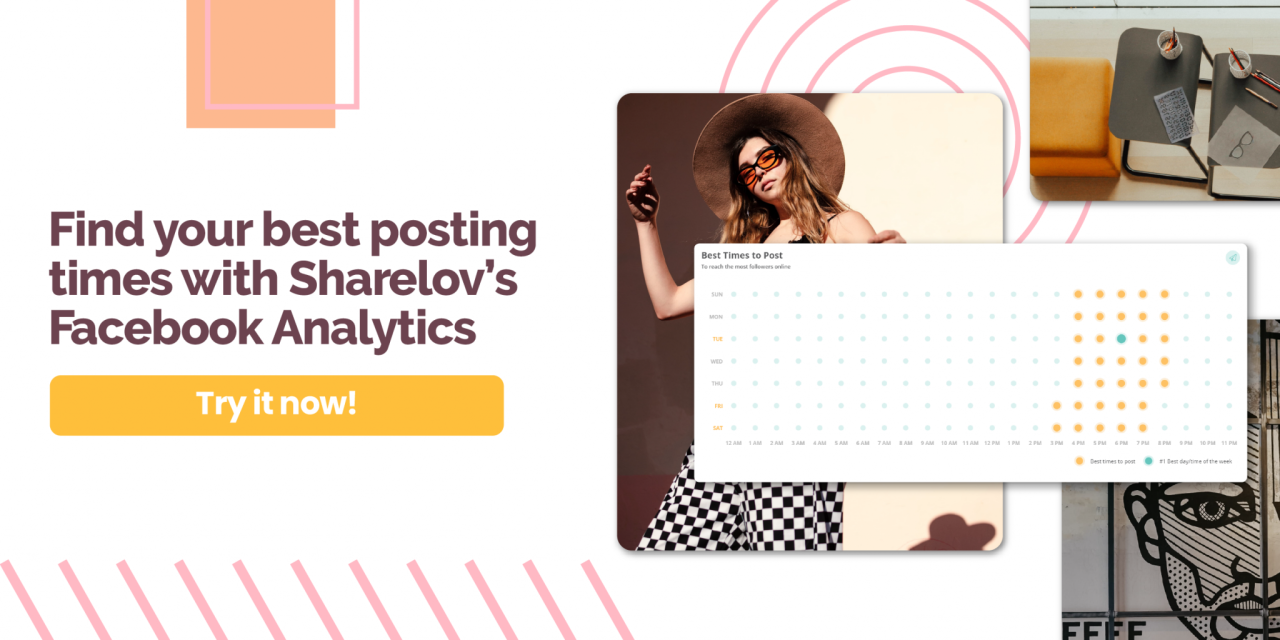
Optimizing your Facebook posting schedule is an ongoing process. It’s not a one-and-done task; rather, it requires continuous monitoring, analysis, and adaptation to maintain engagement and achieve your desired results. Understanding your audience’s online behavior and adapting your strategy accordingly is key to success.Regularly tracking your post performance allows you to fine-tune your posting schedule, ensuring your content reaches the right people at the right time.
This involves analyzing trends in engagement metrics, which helps you identify patterns and adjust your strategy for maximum impact.
Tracking Post Performance Over Time
Understanding how your posts perform over time is crucial for adjusting your posting schedule. This involves collecting and analyzing data from various engagement metrics. A detailed approach helps to identify trends and make informed decisions.
- Comprehensive Data Collection: Gather data on post reach, impressions, engagement (likes, comments, shares), click-through rates (CTR), and website traffic driven by the posts. Utilize Facebook Insights and other relevant analytics tools to record this data systematically.
- Analyzing Engagement Metrics: Look for patterns in engagement metrics over time. For instance, are certain days or times consistently performing better than others? This analysis can reveal when your audience is most active and receptive to your content.
- Identifying Trends: Spot recurring patterns in engagement data. Are there specific types of content that resonate more strongly with your audience during certain hours? These insights will guide you in tailoring your content and posting times to match audience preferences.
Analyzing Trends in Engagement Metrics
Identifying trends in engagement metrics is vital for refining your posting strategy. This involves examining the collected data for recurring patterns and correlations.
- Seasonal Variations: Engagement levels may fluctuate throughout the year. For example, holidays or specific events might trigger increased engagement, while other periods may see lower activity. Recognize these seasonal patterns to adjust your content and posting schedule accordingly.
- Day-of-the-Week Trends: Different days of the week might see different engagement levels. Some days might be better for posting promotional content, while others may be more suitable for sharing engaging stories or behind-the-scenes glimpses.
- Time-of-Day Patterns: Analyzing engagement by time of day reveals when your audience is most active online. Peak engagement periods will allow you to tailor your content for maximum impact and reach.
Importance of Adjusting Posting Schedule Based on Data Analysis
Data analysis provides the foundation for adjusting your posting schedule. By understanding audience engagement patterns, you can optimize your strategy for better results.
- Content Optimization: Data analysis can reveal which types of content resonate best with your audience at specific times. Tailor your content to match audience preferences, ensuring that your posts are relevant and engaging to those who are most likely to interact.
- Reaching the Right Audience: Adjusting posting times based on data analysis ensures your content reaches the intended audience when they are most active online. This maximizes your chances of achieving higher engagement rates.
- Improved ROI: By adapting your posting schedule to align with audience engagement patterns, you improve the return on investment (ROI) of your social media marketing efforts. Increased engagement leads to more conversions and ultimately, greater success.
Adapting to Changes in Audience Engagement Patterns
The online behavior of your audience can change over time. Therefore, constant monitoring is essential for effective social media marketing.
- Flexibility: Be prepared to adapt your posting schedule and content strategy to changing audience engagement patterns. Regular monitoring and analysis are crucial to stay ahead of the curve.
- Responsiveness: Continuously analyze data and be ready to make adjustments to your posting strategy. This includes changing posting times, experimenting with different content formats, or modifying the overall content strategy based on your observations.
- Staying Ahead: By anticipating changes in audience behavior, you’re better positioned to optimize your Facebook strategy and maintain consistent engagement.
Experimenting with Different Posting Times and Content Formats
Exploring different posting times and content formats is a crucial aspect of optimization. Testing various options will help you discover what resonates most effectively with your target audience.
- Testing Different Posting Times: Experiment with various posting times to identify optimal periods for engagement. This involves systematically testing different times and analyzing the resulting engagement metrics.
- A/B Testing Content Formats: Test various content formats to discover which ones perform best. For example, compare the engagement rates of images, videos, and text-based posts.
- Iterative Improvement: Continuously refine your strategy based on the results of these experiments. The key is to analyze the data, identify what works best, and adapt accordingly.
Methods for Tracking and Analyzing Post Performance
A structured approach to tracking and analyzing post performance is vital for informed decision-making.
| Metric | Tracking Method | Analysis Focus |
|---|---|---|
| Reach | Facebook Insights | Identify peak hours for audience visibility |
| Impressions | Facebook Insights | Determine content effectiveness in capturing attention |
| Engagement (likes, comments, shares) | Facebook Insights | Analyze content that triggers interaction |
| Click-Through Rate (CTR) | Facebook Insights, UTM parameters | Evaluate content’s effectiveness in driving traffic |
| Website Traffic | Google Analytics, UTM parameters | Identify content that drives conversions |
Final Thoughts
In conclusion, optimizing your Facebook posting schedule is crucial for maximizing engagement. By understanding your audience, leveraging analytics, and employing the right strategies, you can significantly improve your reach and impact. Remember to track your results, adapt your approach, and always be ready to experiment with different times and content formats to achieve the best results. The key is consistent monitoring and adaptation.