
What are Sitelinks? How to Change Them
What are sitelinks how do you change them sets the stage for understanding how search results can be enhanced. Sitelinks are those helpful, supplementary links that appear beneath your listing in search results. They can dramatically boost click-through rates and improve user experience by providing quick access to relevant information on your website. This comprehensive guide explores what sitelinks are, how to influence their appearance, and best practices for optimizing them.
Understanding how search engines identify and display sitelinks is crucial. Technical aspects like structured data markup, website content quality, and user-friendly architecture all play a significant role. Learn how to leverage these elements to create more informative and attractive sitelinks.
Defining Sitelinks: What Are Sitelinks How Do You Change Them
Sitelinks are a valuable feature in Google search results, enhancing user experience by providing direct access to relevant pages within a website. They essentially act as mini-sitemaps, offering users a preview of the content and services available on the site. Understanding sitelinks is crucial for anyone seeking to optimize their online presence and improve visibility for users.Sitelinks, positioned below the main search result, provide users with a quick and efficient way to navigate to specific content on a website.
This streamlined approach significantly reduces the need for users to delve into the website’s main pages, saving time and improving their overall experience. Google displays sitelinks to enhance the user experience by providing more context and options for users to find what they need quickly.
Sitelinks are those helpful little links Google displays below your main listing in search results. While you can’t directly change them yourself, optimizing your website’s content and structure to provide more relevant information can influence how Google displays them. Understanding how your site provides a valuable user experience is key. This directly relates to first party data collection, which allows you to better understand user behavior and preferences.
First party data is essential for creating a more tailored experience and ultimately influencing the content Google presents as sitelinks. By concentrating on the overall quality of your website and the data you gather about your audience, you will, in turn, positively impact how sitelinks are generated. This can result in higher click-through rates and improved search visibility.
Sitelink Types
Sitelinks are categorized into different types, each serving a unique purpose in directing users to the appropriate content. Understanding these various types allows website owners to strategically structure their content for optimal sitelink visibility.
Common Sitelink Types
| Sitelink Type | Description | Example Content |
|---|---|---|
| Product | Links to specific products offered by the website. | “Red T-Shirt”, “Blue Jeans”, “Laptop Accessories” |
| Service | Links to specific services provided by the website. | “Plumbing Repair”, “House Cleaning”, “Car Repair” |
| Related Questions | Answers to common user questions related to the website’s content. | “How to cook pasta”, “Best running shoes”, “How to start a blog” |
Improving User Experience
Sitelinks significantly enhance the user experience by providing a concise and readily available overview of the website’s content. Users can quickly identify and access relevant information without needing to navigate through numerous pages, which can save time and improve satisfaction. This streamlined approach fosters a positive interaction with the website and increases the likelihood of user engagement.
Factors Affecting Sitelinks
Sitelinks, those helpful snippets appearing below a search result, enhance user experience by offering quick access to various pages within a website. Understanding what influences their generation is crucial for optimizing a website’s visibility and user engagement. Google’s algorithm considers numerous factors, ranging from the technical aspects of your site to the overall user experience.Optimizing for sitelinks goes beyond just stuffing; it’s about creating a well-structured, high-quality website that provides a clear and valuable user experience.
By understanding these influencing factors, website owners can significantly improve their search result presentation and drive more organic traffic.
Technical Aspects of a Website
Website structure plays a significant role in sitelink generation. A well-organized website with clear navigation and logical page hierarchies makes it easier for search engines to understand the relationship between different pages, leading to more accurate and helpful sitelinks. This includes using descriptive URLs, proper use of internal linking, and a consistent website structure across all pages. A user-friendly layout contributes to a positive user experience, which is a crucial factor in sitelink generation.
Structured Data Markup
Structured data markup, a standardized format for providing information about a website to search engines, directly impacts the accuracy and comprehensiveness of sitelinks. By clearly defining the content and relationships between pages, structured data helps search engines understand the website’s organization better. This often results in more relevant and informative sitelinks, leading to improved user engagement. Using schema.org vocabulary is crucial to communicate effectively with search engines about the content on your website.
Sitelinks are those helpful little extra links that appear beneath your listing on search results pages. While you can’t directly change them, you can influence them by optimizing your product pages and overall website structure. It’s important to remember that Google’s algorithm determines what sitelinks show, and sometimes those decisions are influenced by factors like user behaviour and overall website health.
For instance, be mindful of potential pitfalls like Amazon’s “Spark” program, which, as detailed in beware amazon spark , can negatively impact your SEO efforts. Ultimately, focusing on creating a strong, user-friendly website will lead to better sitelink visibility.
Content Quality and Relevance
High-quality, informative, and engaging content is paramount for relevant sitelinks. Search engines prioritize content that provides value to users. When your content is accurate, detailed, and addresses user needs, sitelinks will often reflect this quality, showcasing pages that provide the most relevant answers. For example, a website with in-depth articles about a specific topic is more likely to generate sitelinks that accurately represent the content on those pages.
The depth and relevance of the content directly impact the sitelinks.
Website Architecture
A user-friendly website architecture, with clear navigation and easy-to-understand page hierarchies, is a key factor. Search engines analyze the site’s structure to understand the relationships between different pages. A well-structured site with logical page organization allows search engines to quickly identify and categorize related content, which ultimately results in more relevant and useful sitelinks. This encompasses factors like the site’s internal linking structure and overall navigation design.
Search Engine History
A site’s history, including past performance, search engine rankings, and user engagement metrics, significantly influences the display of sitelinks. Sites with a consistent history of high-quality content and user engagement are more likely to receive prominent sitelinks. A site that has consistently ranked well and attracted organic traffic often receives more prominent and relevant sitelinks. A site’s reputation and trustworthiness within the search engine’s algorithm play a significant role in how its sitelinks are displayed.
Factors Impacting Sitelinks
| Factor | Potential Impact |
|---|---|
| Structured Data | Improves accuracy of sitelinks, showing more specific and relevant information. |
| Content Quality | Results in more relevant sitelinks that better reflect the content on the various pages. |
| Site Architecture | Leads to a better organization of sitelinks, reflecting the clear hierarchy and structure of the website. |
| Search Engine History | Influences the display of sitelinks, with sites having a history of good performance appearing more prominently. |
Modifying Sitelinks

Sitelinks, those helpful mini-sites appearing below your main search result, are often a crucial element for driving traffic and showcasing your site’s offerings. Knowing how to optimize them can significantly improve your search visibility. This section delves into the practical steps for modifying sitelinks, focusing on structured data markup and monitoring performance.Understanding that search engines rely on structured data to comprehend the content of your pages, careful implementation of sitelink markup is paramount for accurate display.
This ensures your sitelinks accurately reflect the pages you want highlighted.
Implementing Structured Data Markup
Properly structured data markup is essential for search engines to understand the content of your pages, which is vital for accurate sitelink display. This involves adding specific tags to your HTML that provide context to the search engine. Following a systematic approach is crucial for effective implementation.
- Identify Target Pages: Begin by pinpointing the pages on your site you want to appear in sitelinks. These could be product pages, blog posts, or specific sections of your website.
- Choose the Appropriate Schema.org Vocabulary: Schema.org provides a standardized vocabulary for structured data. Selecting the right vocabulary for your content type is vital for accurate sitelink generation. For example, if you have product pages, the `Product` schema is appropriate.
- Add Markup to Your HTML: Carefully integrate the chosen schema.org vocabulary into the HTML of your target pages. This often involves adding specific tags within the HTML code, embedding details about the page’s content, and aligning with the selected schema.
- Verify Correct Implementation: Using a structured data testing tool is crucial to verify that the markup is correctly implemented. Tools like Google’s Structured Data Testing Tool will help you identify any errors in your markup.
Utilizing Schema.org Vocabulary
Schema.org provides a structured vocabulary for representing data on web pages. Its use significantly enhances search engine understanding, leading to better sitelink display. Utilizing specific properties within the chosen vocabulary is key.
- Product Schema: For product pages, using properties like `name`, `description`, `price`, `brand`, and `offers` helps search engines understand the product’s details, enabling more relevant sitelinks.
- Article Schema: For articles, `headline`, `datePublished`, `author`, and `description` allow search engines to understand the article’s content and structure, leading to improved sitelink presentation.
Structured Data Markup Examples
The following table demonstrates different types of structured data markup for sitelinks, illustrating the various ways you can mark up different page types.
| Markup Type | Description | Example |
|---|---|---|
| Product | Markups for product pages, including details like name, price, and description. | ` |
| Article | Markups for articles, encompassing details like title, date published, and author. | `
Sitelinks are those helpful, extra links Google displays below your main result. Unfortunately, you can’t directly change them; Google’s algorithm determines which ones show up. This is all part of the bigger picture, though, as recent breaking news suggests that changes to the average Google CTR ( breaking news average google ctr could change seo ) might significantly impact SEO. This could indirectly influence the types of sitelinks Google chooses to display. So, focusing on high-quality content and user experience remains key to optimizing for visibility, regardless of how sitelinks are determined. ` |
Testing and Verifying Sitelinks
Thorough testing and verification are crucial for ensuring that your sitelink markup is correctly interpreted by search engines.
- Structured Data Testing Tools: Use tools like Google’s Structured Data Testing Tool to validate your markup for potential errors.
- Manual Inspection: Carefully inspect the source code of your target pages to ensure accuracy.
Monitoring Sitelink Performance
Google Search Console provides valuable insights into how your sitelinks perform.
- Search Console Reports: Monitor Search Console reports for data on how users interact with your sitelinks, including clicks and impressions.
- Analyzing Data: Analyze the data to identify patterns and areas for improvement in your sitelink markup and overall site structure.
Best Practices for Sitelinks
Sitelinks, those helpful mini-sites appearing below a search result, can significantly boost click-through rates and brand visibility. Optimizing your site for sitelinks isn’t just about technical tweaks; it’s about presenting a clear, concise, and relevant picture of your business to potential customers. Following best practices ensures your sitelinks are not only displayed but also drive meaningful interactions.
Optimizing Site Structure for Sitelink Display
A well-structured website is crucial for Google to understand your offerings and present relevant sitelinks. Clear hierarchy and logical organization of pages are paramount. A sitemap, while not a direct determinant, can help in this process. Properly using header tags (H1, H2, etc.) and internal linking strategies ensures that Google can crawl and index your content effectively.
This clear structure allows Google to discern the core offerings of your website and thus present relevant sitelinks.
Maintaining High-Quality Content for Sitelink Relevance, What are sitelinks how do you change them
High-quality content is the bedrock of successful sitelinks. Google prioritizes content that provides valuable information to users. This includes detailed, informative product descriptions, engaging blog posts, and insightful articles. Content should be original, well-researched, and address user needs. When your content is exceptional, it significantly improves the chances of relevant sitelinks appearing in search results.
Ensuring Mobile-Friendliness for Sitelink Appearance
In today’s mobile-first world, a mobile-friendly website is essential for a positive user experience and, crucially, for sitelink display. A responsive design ensures your website looks and functions flawlessly on all devices. Mobile-friendliness is not just about aesthetics; it’s a critical factor in sitelink visibility. A user-friendly mobile experience, with easy navigation and clear information presentation, signals to Google that your website is a valuable resource.
Examples of Successful Sitelink Implementations
Several businesses have successfully leveraged sitelinks to improve their search visibility and drive traffic. For example, e-commerce stores often see improved click-through rates with sitelinks highlighting specific product categories or bestsellers. Similarly, companies offering services, such as travel agencies or law firms, can showcase relevant service areas or specialized legal practices as sitelinks, improving user engagement. A well-structured site with high-quality content tailored to user needs will yield effective sitelinks that significantly improve a business’s search visibility.
Troubleshooting Sitelink Issues
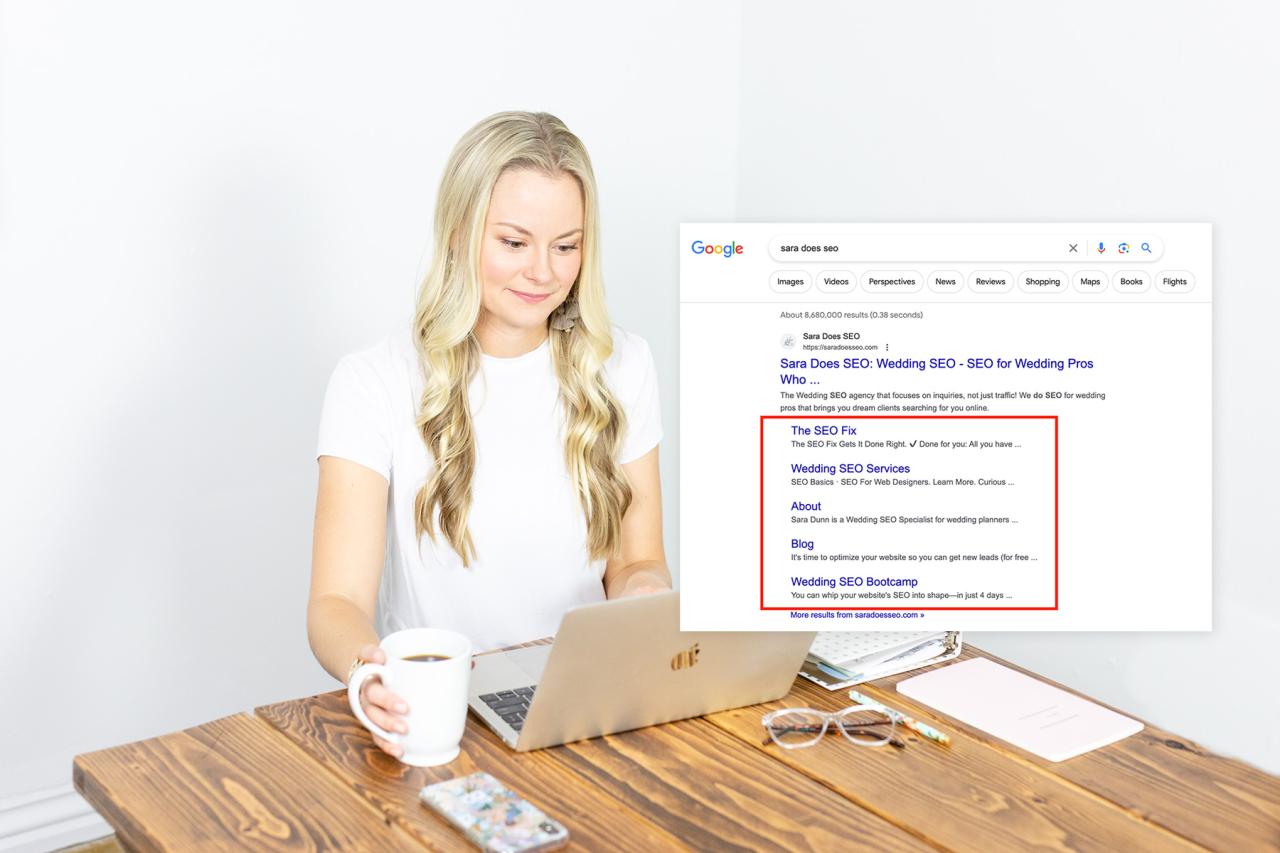
Sitelinks, those helpful little snippets of information that appear below your search result, are a crucial part of a successful online presence. However, sometimes these helpful additions don’t appear, or they appear incorrectly. Understanding why your sitelinks aren’t showing up, or are not as effective as they could be, is essential for improving your search visibility and user experience.
This section dives into troubleshooting common issues and strategies for optimizing your sitelinks.
Identifying and resolving sitelink problems involves a multifaceted approach, combining technical checks, content analysis, and Google Search Console insights. Each step is vital to ensuring your sitelinks are accurate, helpful, and consistent with your brand.
Identifying Problems with Sitelink Display
Sitelinks not showing up can be frustrating. The first step is to identify the root cause. Regularly checking your search results for the target s you’re trying to rank for is crucial. Look closely at your competitors’ sitelinks. This can give you an idea of what’s working for them and what might be missing from your site.
Visual inspection of search results is the initial diagnostic tool.
Debugging Structured Data Markup Errors
Structured data markup is the foundation of sitelinks. Errors in this markup can prevent Google from correctly interpreting your website’s information, resulting in missing or inaccurate sitelinks. Using a structured data testing tool, such as Google’s Rich Results Test, is essential. This tool allows you to verify that the structured data is properly implemented and validates its format.
Identifying and correcting these errors directly impacts the accuracy and visibility of your sitelinks.
Addressing Issues Related to Site Content Quality
Sitelinks are reflections of your website’s content. Low-quality, irrelevant, or thin content will likely result in fewer or no sitelinks. Ensure your content is comprehensive, well-written, and directly addresses user queries. Content quality impacts user engagement and search visibility. A well-optimized content strategy is vital to a successful sitelink strategy.
Interpreting Google Search Console Reports
Google Search Console provides valuable insights into how Googlebot interacts with your website. Analyzing reports, specifically those related to indexing and structured data, can uncover technical issues or errors that may be hindering sitelink generation. Look for errors or warnings related to your structured data implementation. This crucial data can reveal critical issues that may be preventing sitelinks from appearing.
Common Sitelink Problems and Potential Solutions
| Problem | Potential Solution |
|---|---|
| Missing structured data | Implement missing structured data, ensuring accuracy and correctness. |
| Low-quality content | Enhance content relevance and quality by adding more details and specific information. |
| Technical errors | Correct technical errors on the website, such as broken links or server issues. |
| Incorrect structured data | Validate and correct structured data markup using Google’s Rich Results Test. |
Conclusion
In summary, optimizing sitelinks involves a multi-faceted approach. From implementing structured data markup to ensuring high-quality content and a well-organized website architecture, each aspect contributes to the visibility and usefulness of your sitelinks. Monitoring your sitelink performance through Google Search Console is key to troubleshooting and improving their effectiveness. By following the best practices Artikeld in this guide, you can dramatically improve your search visibility and enhance user experience.