Programmatic Advertising A Deep Dive
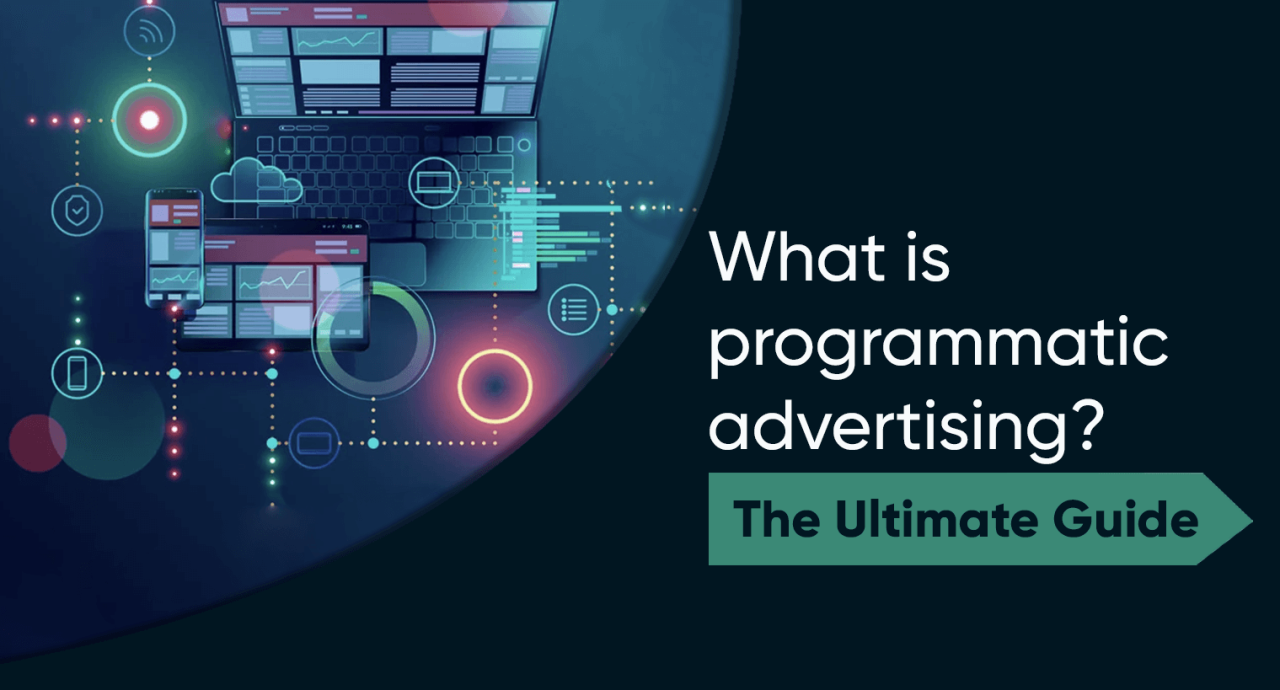
Programmatic advertising is revolutionizing how businesses reach their target audiences. It’s a sophisticated system of automated ad buying and selling, leveraging data and technology to optimize campaigns in real-time. This process goes beyond simple targeting; it delves into intricate details of user behavior, demographics, and interests to deliver highly personalized ads. Imagine a system that understands your audience better than you do – that’s the power of programmatic advertising.
This in-depth exploration will cover everything from the core concepts of programmatic buying to the latest trends shaping the future of online advertising. We’ll break down the key components, examine the benefits and drawbacks, and explore how technology like real-time bidding and data management platforms are driving this evolution.
Introduction to Programmatic Advertising
Programmatic advertising is a digital marketing approach that automates the buying and selling of online advertising space. Instead of relying on manual, human-driven processes, programmatic advertising utilizes algorithms and software to target specific audiences, optimize campaigns in real-time, and track results with greater efficiency. This automation streamlines the entire advertising process, allowing businesses to reach more potential customers with greater precision and control.This technology has revolutionized the advertising landscape, enabling marketers to achieve significant cost savings, maximize return on investment (ROI), and tailor their campaigns to specific demographics and interests.
By leveraging data and sophisticated algorithms, programmatic advertising allows for a highly personalized and targeted approach to reaching consumers.
Key Components of a Programmatic Advertising Campaign
A programmatic advertising campaign involves several key components working together to achieve desired results. These components include:
- Demand-Side Platforms (DSPs): These platforms are used by advertisers to manage and execute their programmatic campaigns. They connect advertisers with available inventory across various websites and apps.
- Supply-Side Platforms (SSPs): SSPs are used by publishers to manage and sell their ad inventory. They provide a centralized platform for publishers to showcase their available ad space and receive bids from DSPs.
- Data Management Platforms (DMPs): DMPs are used to collect, manage, and analyze data about users. This data is crucial for targeting specific demographics and interests, allowing advertisers to create more effective campaigns.
- Real-time bidding (RTB) systems: These systems enable advertisers to bid in real-time on ad impressions. The highest bidder wins the opportunity to display their ad.
Types of Programmatic Advertising Formats
Programmatic advertising encompasses a variety of formats, each designed to cater to specific marketing goals and audience preferences. Common formats include:
- Display ads: These are static or animated images, videos, or text-based ads that appear on websites and apps. They can be tailored to specific audiences and displayed in various sizes and positions.
- Video ads: These are pre-roll, mid-roll, or post-roll video ads that appear before, during, or after video content. They can be used to promote products or services within the context of engaging video experiences.
- Native ads: These ads are designed to seamlessly integrate with the surrounding content on a website or app. They often look and feel like regular articles or posts, avoiding the intrusive feel of traditional banner ads.
- Social media ads: These ads leverage social media platforms to reach specific target audiences. They often use detailed targeting options, enabling advertisers to focus on users with particular interests, demographics, or behaviors.
Steps in a Typical Programmatic Buying Process
The programmatic buying process is a streamlined and efficient process:
- Defining campaign objectives: Before starting, advertisers need to define clear goals for the campaign, including target audience, desired outcomes, and budget.
- Selecting a DSP: The advertiser chooses a DSP that best aligns with their campaign objectives and budget.
- Defining targeting parameters: Based on campaign objectives, advertisers define specific criteria to target potential customers, such as demographics, interests, or behaviors.
- Real-time bidding: The DSP submits bids for ad impressions in real-time, and the highest bidder wins the opportunity to display the ad.
- Campaign monitoring and optimization: Advertisers continuously monitor campaign performance and adjust targeting and bidding strategies as needed.
Programmatic Ad Platform Comparison
The table below compares and contrasts different programmatic ad platforms, highlighting their features, strengths, and weaknesses:
| Platform | Features | Strengths | Weaknesses |
|---|---|---|---|
| The Trade Desk | Extensive targeting options, robust reporting and analytics, advanced campaign management tools. | Wide range of inventory, strong reputation for reliability, extensive data resources. | Can be complex to set up and manage for beginners, higher pricing compared to some alternatives. |
| AppNexus | Offers a broad range of ad formats, flexible targeting capabilities, and real-time bidding. | Excellent for large-scale campaigns due to its scalability, comprehensive reporting. | May require significant technical expertise to optimize campaigns, can be slower to onboard new users. |
| Index Exchange | Focused on providing a comprehensive platform for both buyers and sellers, excellent for diverse ad formats. | Strong community of publishers, excellent support, versatile in campaign types. | Relatively less well-known compared to other platforms, fewer advanced features. |
Benefits and Drawbacks of Programmatic Advertising
Programmatic advertising, driven by algorithms and automation, has revolutionized how businesses reach their target audiences. This shift offers significant advantages but also presents certain challenges. Understanding both sides of the coin is crucial for leveraging programmatic advertising effectively.This approach allows for greater efficiency and precision in ad targeting, ultimately leading to higher conversion rates and a better return on investment.
However, the automated nature of the process also raises concerns about user experience and potential for misuse. A balanced perspective is necessary to maximize the benefits while mitigating the risks.
Key Advantages of Programmatic Advertising
Programmatic advertising empowers businesses to reach highly specific audiences. Leveraging data and algorithms, advertisers can precisely target individuals based on demographics, interests, behaviors, and even real-time context. This precision results in significantly higher conversion rates compared to traditional methods. Furthermore, the automated nature of programmatic buying allows for significant cost savings by optimizing bids in real-time, preventing overspending on irrelevant impressions.
Real-time bidding (RTB) is a core component of this process, ensuring that ads are displayed to the most receptive audiences.
Programmatic advertising is all about efficiency, but to truly understand its impact, you need robust tracking. Properly using UTM tracking is key to understanding which channels are driving conversions in your programmatic campaigns. Knowing this allows you to optimize your programmatic advertising strategy for maximum ROI. Learn more about use utm tracking and how to leverage its power to get the most from your programmatic efforts.
Potential Downsides of Programmatic Advertising
Despite its advantages, programmatic advertising is not without its drawbacks. One significant concern is the potential for ad fatigue and user frustration. Constantly bombarded with ads, users may develop a negative perception of online experiences. Moreover, the reliance on algorithms can inadvertently exclude certain demographics or segments of the population, leading to potential biases in advertising targeting.
This is crucial to consider for equitable advertising practices. Additionally, the complexity of programmatic platforms can pose a challenge for advertisers who lack the necessary technical expertise. Proper training and support are essential to avoid costly mistakes and maximize results.
Comparative Analysis of Benefits and Drawbacks
The benefits of programmatic advertising, such as precision targeting and cost efficiency, are often overshadowed by the potential for negative user experiences and algorithmic bias. A balanced approach is vital. Advertisers must carefully consider the potential drawbacks and mitigate them through appropriate targeting strategies, transparency, and constant monitoring of campaign performance. Understanding the limitations and proactively addressing potential issues are key to achieving successful programmatic campaigns.
Real-World Examples of Successful Programmatic Campaigns
Numerous brands have achieved significant success with programmatic advertising. For instance, e-commerce companies often utilize programmatic display ads to target specific customer segments with personalized product recommendations. Similarly, retailers have seen improved conversion rates by dynamically adjusting ad pricing based on real-time consumer demand. The key is to leverage data-driven insights to optimize campaigns in real time.
Potential Risks Associated with Programmatic Advertising
The automated nature of programmatic advertising presents potential risks, including ad fraud and mismatched targeting. Ad fraud involves deceptive practices to inflate ad impressions or clicks, reducing the effectiveness of campaigns and wasting budgets. Mismatched targeting can lead to wasted ad spend by reaching irrelevant audiences. Careful monitoring of campaign performance and utilizing reputable ad platforms are essential to minimize these risks.
Programmatic advertising is all about efficiently reaching the right audience, but understanding your marketing ROI is key. Knowing how to calculate Return On Marketing Investment (ROMI) versus Return On Ad Spend (ROAS) is crucial for success in this space. For a deep dive into the nuances of ROMI vs ROAS, check out this helpful guide on romi vs roas marketing metric.
Ultimately, mastering these metrics will help you optimize your programmatic advertising campaigns for maximum impact and profitability.
Summary Table of Benefits and Drawbacks of Different Programmatic Ad Types
| Ad Type | Benefits | Drawbacks |
|---|---|---|
| Display Ads | Highly targeted, cost-effective, and measurable results; ability to reach specific demographics and interests. | Potential for ad fatigue, difficulty in measuring brand lift, and dependence on ad platform quality. |
| Video Ads | High engagement potential, effective in capturing attention, and ability to reach wider audiences. | Potential for high costs, difficulty in measuring effectiveness in specific contexts, and dependence on video ad platform quality. |
Targeting and Optimization in Programmatic Advertising

Programmatic advertising relies heavily on sophisticated targeting strategies to ensure ads reach the right audience at the right time. This precision is crucial for maximizing return on investment (ROI) and minimizing wasted ad spend. By understanding and effectively utilizing targeting methods, advertisers can dramatically improve campaign performance and achieve better results.Targeting in programmatic advertising is not a one-size-fits-all approach.
Programmatic advertising is all about making sure your ads reach the right people, at the right time. But to truly optimize that, you need to understand the nuances of location targeting. This is where a geo service announcement, like the one found on geo service announcement , comes into play. Knowing where your target audience is located, and what’s happening in those areas, allows for even more precise targeting within programmatic advertising campaigns.
It’s a powerful tool for anyone looking to maximize their ROI.
Instead, it’s a dynamic process that allows advertisers to refine their campaigns based on real-time data and user behavior. This dynamic adaptation ensures that ads are displayed to users most likely to convert, maximizing the impact of each impression.
Targeting Methods in Programmatic Advertising
Programmatic advertising leverages various targeting methods to reach specific audiences. Understanding these methods allows advertisers to create campaigns that are more effective and efficient. A range of targeting options is available, enabling advertisers to focus on specific demographics, interests, and behaviors.
- Demographic Targeting: This method focuses on user characteristics like age, gender, location, income, and education level. This strategy allows advertisers to target specific segments of the population based on their demographic profiles. For example, a company selling baby products might target users in the 25-35 age range who are located in areas with high birth rates.
- Behavioral Targeting: This approach examines user actions and online behavior to understand their interests and preferences. Advertisers use browsing history, website visits, and app usage to tailor ads to individuals’ specific needs. A user frequently visiting e-commerce sites for electronics might receive ads for new smartphones or gadgets.
- Interest-Based Targeting: This method identifies users’ interests based on their online activity, such as websites visited, content consumed, and products researched. This strategy allows advertisers to display relevant ads to users based on their passions and hobbies. A user who regularly reads articles about gardening might receive ads for gardening tools and supplies.
- Contextual Targeting: This approach matches ads to the content of the webpage or app where they are displayed. By aligning ads with the surrounding content, contextual targeting ensures relevance and avoids disrupting the user experience. An article about travel might display ads for travel agencies or accommodations.
- Retargeting: This strategy targets users who have previously interacted with a brand’s website or ads. Retargeting allows advertisers to re-engage potential customers and remind them of products or services they may be interested in. A user who visited a product page on an e-commerce site but didn’t make a purchase might receive ads for that specific product on other websites they visit.
Optimizing Programmatic Campaigns for Maximum ROI
Optimizing programmatic campaigns for maximum ROI involves ongoing monitoring and adjustments. Continuous evaluation and fine-tuning are essential for ensuring that campaigns deliver the best possible results. This requires a keen understanding of data analysis and a willingness to adapt strategies based on real-time feedback.
- A/B Testing: Testing different ad creatives, targeting parameters, and bidding strategies allows for the identification of the most effective approach. A/B testing helps optimize campaigns to increase conversions and minimize wasted ad spend.
- Conversion Tracking: Monitoring key metrics like click-through rates (CTR), conversion rates, and return on ad spend (ROAS) provides valuable insights into campaign performance. This data guides informed decisions to enhance campaign effectiveness.
- Bid Optimization: Adjusting bids dynamically based on real-time data, such as competition and user engagement, ensures that ads are displayed at optimal prices. Optimizing bids can significantly improve ROI by securing favorable ad placements.
Data’s Role in Programmatic Targeting
Data plays a critical role in programmatic targeting. It fuels the insights needed to personalize ad experiences and reach the most relevant audiences. By analyzing vast amounts of data, programmatic systems can predict user behavior and preferences. This enables highly targeted ad delivery.
Advanced Targeting Strategies
Advanced targeting strategies leverage sophisticated data analysis and machine learning to create even more refined and effective targeting.
- Predictive Modeling: Using algorithms to forecast user behavior and preferences, predictive modeling allows for proactive targeting. By anticipating user needs, advertisers can preemptively present relevant ads.
- Lookalike Modeling: This strategy identifies users with similar characteristics to existing customers or high-value prospects. This method extends reach by targeting audiences likely to have similar interests and behaviors.
Common Optimization Techniques, Programmatic advertising
Implementing optimization techniques is vital for achieving optimal campaign performance. These techniques help ensure that ads are shown to the right people at the right time.
- Budget Optimization: Allocating budget across different targeting segments and ad creatives based on performance data. Budget optimization helps ensure that resources are allocated to the most effective channels and targeting options.
Targeting Options Table
| Targeting Method | Description | Use Cases |
|---|---|---|
| Demographic Targeting | Targets users based on age, gender, location, income, and education. | Product targeting based on typical buyer demographics; tailoring ads to specific age groups. |
| Behavioral Targeting | Targets users based on their online actions, such as website visits, searches, and purchases. | Recommending products related to previous purchases; retargeting users who abandoned shopping carts. |
| Interest-Based Targeting | Targets users based on their expressed interests, such as hobbies, topics, and brands. | Promoting products or services relevant to users’ hobbies or interests. |
| Contextual Targeting | Targets users based on the content of the webpage or app they are visiting. | Displaying ads relevant to the topic of the webpage; avoiding irrelevant ad placements. |
| Retargeting | Targets users who have previously interacted with a brand’s website or ads. | Reminding users of products or services they’ve shown interest in; encouraging repeat purchases. |
The Role of Technology in Programmatic Advertising
Programmatic advertising relies heavily on technology to automate the buying and selling of ad space. This automation significantly enhances efficiency and allows for a more targeted approach compared to traditional methods. It’s a dynamic field, constantly evolving with new tools and techniques to optimize campaigns. The seamless integration of various technologies forms the bedrock of programmatic’s success.The intricate dance of algorithms, data streams, and real-time decisions fuels the entire process.
This technology empowers advertisers to reach the right audience at the right time, optimizing their ad spend and maximizing return on investment.
Key Technologies Powering Programmatic Advertising
Programmatic advertising relies on a sophisticated ecosystem of technologies working in concert. These technologies allow for the automation of ad buying and selling, which dramatically increases efficiency and effectiveness compared to traditional methods. The key technologies include real-time bidding (RTB), ad exchanges, data management platforms (DMPs), and machine learning.
Real-Time Bidding (RTB)
Real-time bidding (RTB) is a crucial component of programmatic advertising. It’s a dynamic auction process where advertisers bid in real time for ad impressions. In this process, ad requests are sent to the ad exchange, and multiple advertisers bid on the opportunity to display their ads. The highest bidder wins the opportunity to show their ad to the user.
This real-time aspect allows for maximum efficiency in allocating ad space.
Ad Exchanges
Ad exchanges are centralized platforms where advertisers and publishers can connect to buy and sell ad inventory. They act as intermediaries, facilitating the bidding process and ensuring transparency and efficiency. These platforms use sophisticated algorithms to match buyers and sellers, optimizing the ad experience for both parties. Ad exchanges are crucial for the smooth operation of programmatic advertising.
Data Management Platforms (DMPs)
Data management platforms (DMPs) are vital for collecting and analyzing user data. They aggregate and organize data from various sources, creating comprehensive profiles of users. This data helps advertisers target specific audiences more precisely. DMPs are critical for developing detailed user profiles, enabling targeted advertising campaigns.
Machine Learning in Programmatic Advertising
Machine learning plays a significant role in optimizing programmatic campaigns. Algorithms analyze vast amounts of data to predict user behavior and preferences, enabling more targeted and effective ad placements. This process continuously refines targeting strategies, ensuring that ads are shown to the most relevant users. Machine learning enhances the precision of programmatic advertising.
Artificial Intelligence (AI) in Programmatic Advertising
AI is increasingly utilized in programmatic advertising to enhance decision-making. AI-powered tools analyze data to predict user behavior and preferences, enabling even more refined targeting. This enhances the accuracy of ad placements and significantly improves campaign performance. AI allows for even more sophisticated targeting and optimization in programmatic campaigns.
Technical Components of a Programmatic Ad Stack
This table Artikels the various technical components of a programmatic advertising stack.
| Technology | Function | Impact |
|---|---|---|
| Real-Time Bidding (RTB) | Facilitates real-time auctions for ad impressions, enabling advertisers to bid on and win the opportunity to display their ads to users. | Increases efficiency and transparency in ad allocation, maximizing ROI for advertisers and publishers. |
| Ad Exchanges | Centralized platforms that facilitate the buying and selling of ad inventory, connecting advertisers and publishers. | Improves the efficiency of the ad buying and selling process, streamlining transactions and optimizing campaign performance. |
| Data Management Platforms (DMPs) | Collect, analyze, and manage user data to create detailed profiles, enabling precise targeting of specific audiences. | Enhances targeting precision, leading to more effective ad campaigns and improved ROI. |
| Machine Learning | Uses algorithms to analyze vast amounts of data, predicting user behavior and preferences to optimize ad placements. | Improves campaign performance by refining targeting strategies and maximizing the relevance of ads to users. |
| Artificial Intelligence (AI) | Utilizes advanced algorithms to analyze data, making predictions about user behavior and enabling even more refined targeting. | Further enhances the sophistication and precision of programmatic advertising, leading to greater campaign effectiveness and ROI. |
Future Trends in Programmatic Advertising
Programmatic advertising is rapidly evolving, driven by technological advancements and shifting consumer behaviors. The future promises even more sophisticated targeting, personalized experiences, and innovative ad formats. Understanding these trends is crucial for marketers to stay ahead of the curve and maximize ROI in this dynamic landscape.
Emerging Trends and Innovations
The industry is witnessing a confluence of emerging trends, from AI-powered targeting to a heightened focus on privacy. These innovations are shaping how advertisers connect with consumers, offering both exciting opportunities and unique challenges. New technologies and platforms are constantly being developed, aiming to enhance efficiency, effectiveness, and user experience. This evolution requires a proactive approach from marketers, demanding a constant learning curve to navigate the ever-changing landscape.
Artificial Intelligence and Machine Learning
AI and machine learning are transforming programmatic advertising. These technologies enable more sophisticated targeting, optimizing campaigns in real-time based on vast amounts of data. AI algorithms can analyze user behavior, predict future actions, and personalize ad experiences. For example, an AI system might identify a user interested in a specific type of travel based on past browsing history and deliver relevant ads for similar trips, thereby increasing the chances of conversion.
This allows for more precise targeting and enhanced campaign performance.
Emerging Technologies Impacting Programmatic Advertising
Several emerging technologies are impacting programmatic advertising. The rise of the metaverse, virtual reality (VR), and augmented reality (AR) is creating new avenues for advertising, offering immersive and interactive experiences. These new technologies will continue to redefine the way brands connect with consumers. For example, a fashion brand might use AR to allow customers to virtually try on clothes in their own homes before making a purchase, enhancing the customer experience and potentially driving conversions.
Privacy Regulations and Their Role
Privacy regulations, such as GDPR and CCPA, are becoming increasingly important in programmatic advertising. Advertisers must prioritize data privacy and ensure compliance with regulations to maintain user trust and avoid legal repercussions. This shift towards user-centric practices necessitates careful data management and transparent disclosure policies. Advertisers who prioritize user privacy will likely gain a competitive advantage in the long run.
Potential Future Challenges and Opportunities
The future of programmatic advertising presents both challenges and opportunities. Maintaining user trust and complying with evolving privacy regulations is paramount. However, the potential for innovation and improved targeting is immense. For example, a company might face a challenge in adapting to new privacy regulations, but the opportunity lies in developing innovative and transparent ways to gather and utilize user data while adhering to those regulations.
Growth Projections
Programmatic advertising is projected to continue its rapid growth, driven by factors like the increasing adoption of digital channels and the rise of mobile devices. The evolving nature of this industry necessitates a forward-thinking approach for all stakeholders. Data from industry reports suggests significant growth in the coming years, with a projected annual increase in the volume of programmatic ad spend.
Potential Future Developments
- Improved targeting based on AI: AI-powered targeting will become even more sophisticated, leading to higher conversion rates and a better return on investment (ROI) for advertisers. AI algorithms can analyze vast amounts of data to identify highly specific user segments, delivering highly personalized experiences that resonate with the user and improve campaign performance.
- Greater emphasis on privacy: Privacy regulations will continue to evolve, demanding that programmatic platforms prioritize user privacy. Transparency and user control over their data will be key aspects of successful programmatic strategies. Advertisers will need to demonstrate their commitment to user privacy to maintain trust and build long-term relationships.
- Rise of new ad formats: New ad formats, such as interactive and immersive experiences, will continue to emerge, creating opportunities for advertisers to engage users in more innovative ways. This will lead to more compelling and engaging ad experiences for consumers, driving higher engagement rates.
Final Review
In conclusion, programmatic advertising offers a powerful way to reach audiences effectively, but it’s crucial to understand its complexities and potential risks. This dynamic field is constantly evolving, with AI and machine learning playing a growing role. By mastering the strategies and technologies involved, businesses can harness the full potential of programmatic advertising to achieve their marketing goals. The future of online advertising is undeniably programmatic, and understanding its nuances is key to success.